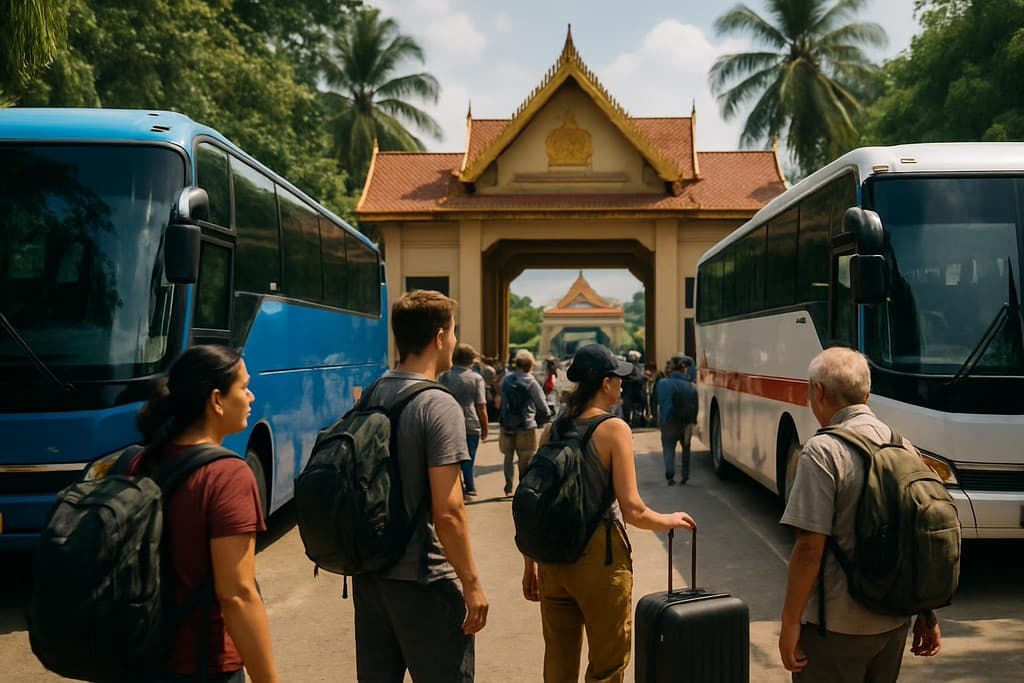
Land Border Crossings in Southeast Asia: What You Need to Know
Traveling overland between countries in Southeast Asia—such as Thailand, Cambodia, Vietnam, Laos, and Myanmar—can be a unique adventure. But when it comes to crossing land borders, it’s important to understand your options, the key differences between crossings, and what to expect in practice. This guide focuses on the important decisions: which border to choose, what actually happens at the crossings, and how to avoid classic traveler pitfalls.
When Should You Choose a Land Border Crossing?
- If your route starts and ends near the border — for example, traveling from Bangkok to Siem Reap or from Hanoi to Laos.
- To save money: Overland travel is often cheaper than flights, especially if you take overnight buses.
- If you enjoy slow journeys and changing scenery: You’ll see much more than from a plane window.
- However: If you’re short on time or prioritize maximum comfort, flights may be a better choice.
Editorial Insight:
Not all land borders in Southeast Asia are created equal—some are efficient and straightforward, while others involve unnecessary fees, delays, or bureaucratic confusion. Choosing the right crossing can save you frustration and precious time.
Thailand–Cambodia: Classic Crossings and Smart Choices
Two main popular crossing points:
- From Bangkok (Thailand) to Siem Reap or Phnom Penh (Cambodia)
- From Bangkok to Battambang (an alternative, less crowded destination)
Key Recommendation
The Bangkok → Siem Reap route is the most well-known, with direct buses available via 12Go and Bookaway, as well as minivans.
If you want to avoid tourist crowds and long waits at the border, consider Bangkok → Battambang — it’s less touristy and sometimes faster.
Practical Tips:
- Take a direct bus: Choose a reputable provider (like 12Go or Bookaway) that brings you right to the border, helps with procedures, and continues on after passport checks.
- Avoid ultra-cheap services: Many stop at a “restaurant” before the border, where they try to sell you overpriced visas.
- Bring US dollars in cash for the Cambodian visa at the border.
On the Ground:
The Cambodian side of the border can involve a long wait—sometimes an hour or two. During busy times, an early morning departure is recommended.
Relevant links:
Thailand–Laos: The Golden Route and What to Check
The most popular crossing: Chiang Rai → Laos (Houay Xai).
This is ideal if you plan to continue by boat along the Mekong River to Luang Prabang.
How Does It Work?
- Buses and minivans leave from Chiang Rai (via 12Go/Bookaway) and go right up to the border.
- After border checks, you’ll switch to a local vehicle on the Laos side.
Editorial Note:
In winter (December–February), the Mekong River is lower, making the Laos-to-Luang Prabang slow boat trip especially pleasant and scenic. In summer, expect more rain—crossings can be wet and muddy, so consider the season when planning.
Relevant link:
Cambodia–Vietnam: A Border Full of Surprises
The main crossing is Phnom Penh → Ho Chi Minh City.
A less crowded option: Kampot → Ho Chi Minh City.
Practical Tips:
- Direct buses or minivans (Bookaway/12Go) provide support through the border process.
- The crossing is generally efficient, but there can be delays if the bus is full.
Editorial Note:
This border is known for its relative efficiency, but sometimes visa checks are more thorough. Have your documents well organized, especially if you’ve stayed in Cambodia for an extended period.
Links:
Laos–Vietnam: For the Adventurous
The classic crossing: Lao Cai (Laos) → Hanoi — especially good for those exploring northern Vietnam and heading to Sapa or Hanoi.
What to Know:
- Few direct journeys are available, so booking in advance (Bookaway/12Go) is recommended.
- This route often involves an overnight sleeper bus.
Editorial Note:
This border is less touristy and therefore less commercialized—expect fewer facilities, but also fewer hassles. It’s an authentic experience, especially if you’re not in a rush.
Relevant link:
Thailand–Myanmar: For Experienced Travelers
The main crossing: Bangkok → Bagan.
This is a particularly long journey with multiple transfers.
Practical Tips:
- Not all crossings are open to all tourists—check the current border status in advance.
- Prepare for many hours on the road and limited comfort options.
Editorial Note:
If you’re seeking an authentic journey with few other travelers, this is the crossing for you. It requires patience and isn’t for everyone.
Relevant link:
Islands and Special Crossings: Cambodia, Vietnam, Thailand
Southeast Asia’s islands offer unique opportunities to hop between countries, particularly between Cambodia, Thailand, and Vietnam.
The Koh Rong (Cambodia) → Ho Chi Minh City route, for example, combines ferry and overland bus travel.
What to Know:
- This journey involves a ferry (bookable via Direct Ferries or Ferryhopper) and a land bus — booking through Bookaway or 12Go streamlines the process.
- Coordination is key—book the entire route in advance.
Editorial Note:
If your trip includes islands, opt for a combined package. This saves time and hassle when transferring between piers and bus stations.
Links:
How to Choose a Provider and Route: A Practical Framework
What to check before booking:
- Is the journey direct, or do you need to switch vehicles at the border?
- Is the company reputable, with solid reviews?
- Do they provide support during the border process?
Recommended booking platforms:
- 12Go and Bookaway: Leading providers for overland travel, with up-to-date info on border availability.
- Direct Ferries and Ferryhopper: For trips combining ferries.
- Omio: For those who prefer a different interface or want to combine with trains.
Editorial Note:
Reputable companies usually provide assistance throughout the crossing, especially on tourist-friendly buses—this can make a big difference on busy border days.
Recommended Routes Between Major Cities
- Bangkok → Siem Reap
- Bangkok → Battambang
- Chiang Rai → Houay Xai (Laos)
- Phnom Penh → Ho Chi Minh City
- Kampot → Ho Chi Minh City
- Lao Cai → Hanoi
- Bangkok → Bagan
- Koh Rong → Ho Chi Minh City
- Koh Rong Samloem → Phnom Penh
- Siem Reap → Phnom Penh — An internal route that can connect to international border crossings.
Summary: How to Choose the Right Crossing
- For maximum comfort: Choose routes with direct buses and book via major providers.
- For an authentic experience: Opt for lesser-known routes, but always check border and visa conditions in advance.
- For island connections: Go for combined packages (ferry + bus).
- Always: Check weather, border status, and route availability before you travel.
Choosing the right border crossing can save you time, money, and stress—and turn a simple transfer into a memorable part of your Southeast Asia adventure.
meta_title_en
Land Border Crossings in Southeast Asia: Traveler’s Guide
meta_desc_en
Essential guide to land border crossings in Southeast Asia. Find routes, tips, and what to expect when traveling overland between Thailand, Cambodia, Vietnam, Laos, and Myanmar.