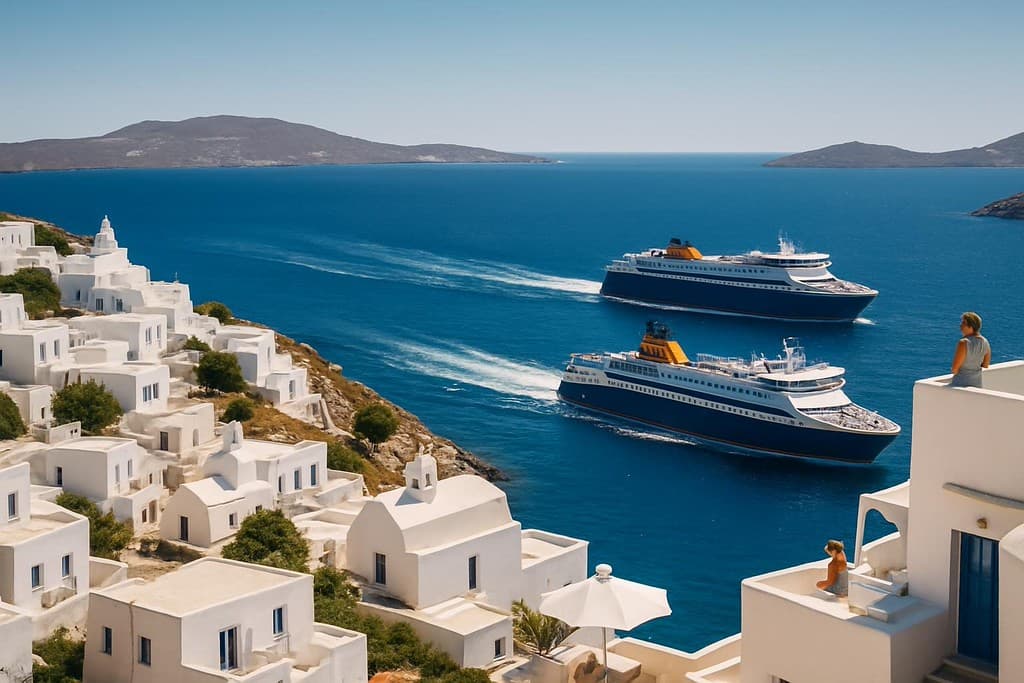
## Greek Island Hopping — Practical Guide to Itineraries, Transport & Budget

Greece’s iconic islands are famous for their white-sand beaches, colorful villages, authentic cuisine, and a laid-back, free-spirited vibe. But how do you actually get from one island to another? Should you take a ferry, a domestic flight, or combine both? Here you’ll find a sample itinerary, detailed transport options for each leg, insights from experienced travelers, and real-world budget considerations.

---

## Recommended Route: Athens → Mykonos → Santorini → Heraklion (Crete) → Rhodes → Corfu

This route links some of Greece’s most popular islands and cities, offering a taste of classic Greece alongside the unique character of each destination. Starting from Athens — the main gateway — you’ll hop from island to island, each with its own scenery, atmosphere, and flavors.

---

### Athens — Your Gateway to the Islands

Travelers usually begin their island journey at Piraeus, Athens’ main port.

- **Getting to the port:** From Athens International Airport, reach [Piraeus](/places/piraeus) by taxi, suburban train, or bus.
- **Tip:** During the busy season (June–September), book ferry tickets in advance—especially for popular routes—using [Direct Ferries](https://www.directferries.com/), [Ferryhopper](https://www.ferryhopper.com/), or [Bookaway](https://www.bookaway.com/).

---

## Leg 1: Athens (Piraeus) → Mykonos
- **Main option:** Fast or regular ferry
- **Booking platforms:** Ferryhopper, Direct Ferries, Bookaway, 12Go
- **Route:** [Piraeus – Mykonos](/routes/piraeus-mykonos)
- **Frequency:** Multiple daily departures
- **Price:** Wide range—about €30 for a standard ferry, up to €70–90 for a high-speed option (varies by ticket type and season)
- **Insider tip:** High-speed ferries save time but are less stable in rough seas. If you’re prone to seasickness, consider the slower, more stable ferries—even if the journey takes an extra hour or two.

---

## Leg 2: Mykonos → Santorini
- **Main option:** Ferry
- **Booking platforms:** Direct Ferries, Bookaway, Ferryhopper
- **Route:** [Mykonos – Santorini](/routes/mykonos-santorini)
- **Frequency:** Several times daily, especially in high season
- **Price:** €50–80
- **Insider tip:** This is a very popular line and often sells out in season. High-speed ferries fill up first. Reserve ahead, especially if you want a specific seat or plan to take a car.

---

## Leg 3: Santorini → Heraklion (Crete)
- **Main option:** Ferry
- **Booking platforms:** Direct Ferries, Ferryhopper, Bookaway
- **Route:** [Santorini – Heraklion](/routes/heraklion-santorini)
- **Frequency:** Several daily in summer, fewer in winter
- **Price:** €40–80
- **Insider tip:** One of the most convenient routes between major islands—travel time is short (about 2 hours by fast ferry), and vessels are generally comfortable and spacious.

---

## Leg 4: Heraklion → Rhodes
- **Options:** Ferry, sometimes domestic flight (check seasonal availability)
- **Booking platforms:** Bookaway, Direct Ferries
- **Route:** [Heraklion – Rhodes](/routes/heraklion-athens)
- **Frequency:** A few times per week
- **Price:** €40–90
- **Insider tip:** The crossing between Crete and Rhodes is long (6–12 hours, depending on route and stops). Consider an overnight ferry with a cabin—this saves on hotel costs and is a unique experience.

---

## Leg 5: Rhodes → Corfu
There is no direct connection between these two islands; you’ll need to route via the mainland.

- **Step 1:** Rhodes → Athens (Piraeus)
  - Rhodes – Piraeus
  - Popular overnight ferry several times per week, with beds/cabins available
- **Step 2:** Athens (Piraeus) → Corfu
  - Piraeus – Corfu
  - Alternatively, take a train or bus to Ioannina, then a ferry to Corfu
- **Insider tip:** Consider a domestic flight between Athens and Corfu if ferry schedules are inconvenient.

---

## Alternative Legs & Additional Routes

### Mykonos → Piraeus (Return to Athens)
[Mykonos – Piraeus](/routes/piraeus-mykonos)
Daily ferries, the fastest way back to the mainland.

### Santorini → Piraeus
[Santorini – Piraeus](/routes/piraeus-santorini)
A convenient line, especially for those ending their trip in the southern Cyclades.

### Piraeus → Heraklion
[Piraeus – Heraklion](/routes/piraeus-heraklion)
Comfortable overnight ferry—classic Greek experience, sleeping at sea.

### Piraeus → Rhodes
[Piraeus – Rhodes](/routes/piraeus-mykonos)
Ideal for those wanting to start their trip on the largest Dodecanese island.

### Thessaloniki → Kavala
[Thessaloniki – Kavala](/routes/thessaloniki-kavala)
A practical alternative for travelers in northern Greece.

### Kalabaka → Athens
[Kalabaka – Athens](/routes/kalabaka-athens)
For those adding a Meteora trek to their itinerary.

---

## Budget Planning — Managing Ferry Expenses

- **Standard tickets:** Most crossings offer regular seating at reasonable prices (€30–70 per leg).
- **High-speed ferries:** 30–50% more expensive than regular ferries but save hours of travel.
- **Cabins:** On overnight ferries, an extra €40–100 secures a bed and a different travel experience.
- **Rental cars:** Taking a car between islands is costly (often €50–100 extra per leg); it’s often cheaper to return your car on one island and rent again at the next.
- **Advance booking:** Essential in high season. Off-season, last-minute bookings are possible, but some routes have very limited service.
- **Discounts:** Children, infants, students, and seniors may be eligible for discounts—check each booking site for details.

---

## Pro Traveler Insights: Making the Most of Greek Ferries

- **Ferry comfort:** Routes between nearby islands (like [Mykonos – Santorini](/routes/mykonos-santorini)) are modern and comfortable. Longer trips (such as [Heraklion – Rhodes](/routes/heraklion-athens)) can be a test of patience—bring a book, headphones, and snacks.
- **Seasonality:** July–August is peak season—crowds and prices are at their highest. April–June and September–October offer great weather, fewer crowds, and better prices.
- **Port access:** Not every island’s port is near the main town—for example, in Santorini, you’ll need a taxi or bus from the port to the main village.
- **Availability:** Not all routes run year-round—off-season services are much reduced, and you may need to adjust your itinerary.

---

## Practical Summary — How to Plan an Effective Greek Island Route

- Set a clear start and end point—usually [Piraeus](/places/piraeus), the main entry port.
- Check which routes are available on your travel dates—use Ferryhopper, Bookaway, or Direct Ferries to compare schedules.
- Build in flexibility—keep a spare day in case of weather disruptions or ferry cancellations.
- If short on time, focus on a linear chain of islands ([Piraeus – Mykonos – Santorini – Heraklion](/routes/piraeus-mykonos), [Mykonos – Santorini](/routes/mykonos-santorini), [Santorini – Heraklion](/routes/heraklion-santorini)), and don’t attempt more than three or four islands.
- Consider domestic flights for especially long crossings, especially if your schedule is tight.
- Stay near the port on nights before early departures to avoid morning stress.

Island hopping in Greece is a memorable adventure—plan carefully but stay flexible, and you’ll discover a side of Greece few travelers see.
** Greek Island Hopping — Routes, Ferries & Planning Guide
** Plan your Greek island hopping adventure: best routes, ferries, tips, and budget advice for Athens, Mykonos, Santorini, Crete, Rhodes & Corfu.