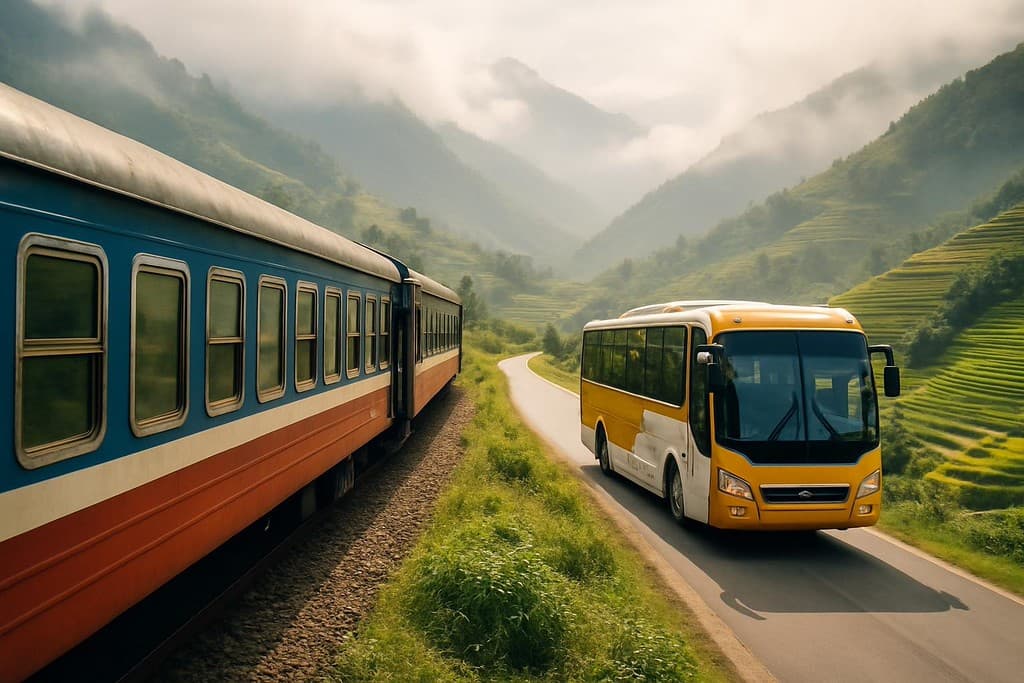
Hanoi to Sapa — Getting There
Traveling from Hanoi to Sapa is a highlight of any trip to northern Vietnam. Sapa is a scenic mountain town in the heart of the Lao Cai region, known for its trekking routes, rice terraces, ethnic minority villages, and cool climate—a refreshing contrast to bustling Hanoi. The key question is how to get there in a way that fits your travel style, budget, and schedule.
There are several main options, each offering a different experience in terms of comfort, travel time, and cost.
Overview of Options
- Overnight train from Hanoi to Lao Cai + minibus to Sapa
- Direct bus from Hanoi to Sapa
- Private car (shared minivan or private transfer)
- Flights (not relevant—there’s no airport in Sapa or Lao Cai)
In practice, the two most popular choices are the overnight train and the direct bus. The main difference: the train is more comfortable for sleeping, while the bus is faster and usually cheaper.
Overnight Train from Hanoi to Sapa (via Lao Cai)
This is the classic and iconic way to reach Sapa.
The train departs from Hanoi Station and arrives in Lao Cai city, from where you continue the final 35 km to Sapa by minibus or taxi.
- Travel time: About 8–9 hours by train, plus another hour to Sapa
- Cost: Wide range—$25 for a standard berth, up to $70–80 for a private first-class cabin. Prices vary a lot depending on the train and class; check Hanoi–Lao Cai night trains via 12Go, Bookaway, or Omio for details.
- Comfort:
- Sleeper cabins (4-berth or 2-berth), clean bedding, relatively quiet
- Basic facilities—not always the most modern
- Pros: Authentic travel experience, you can sleep and arrive refreshed
- Cons: You’ll need to transfer to another vehicle from Lao Cai to Sapa
- Frequency: Night trains depart every evening, usually around 9–10 pm
- Booking: Advanced booking is essential in high season, especially for private cabins.
- Continuing to Sapa:
- Minibuses to Sapa are readily available outside Lao Cai station (about 50 minutes). You can also book a combined Hanoi–Lao Cai–Sapa ticket.
Editorial insight:
The train is not just a means of transport—it’s a unique Vietnamese experience. VIP 2-berth cabins are worth the splurge if you want privacy and comfort, especially on a night journey. If you’re sensitive to noise or movement, bring earplugs.
Direct Bus from Hanoi to Sapa
The fastest and most budget-friendly option.
Buses depart Hanoi in the morning, afternoon, or overnight, and take you straight to Sapa without the need to change vehicles.
- Travel time: 5.5–7 hours, depending on route and stops
- Cost: $12–25, depending on bus type (standard, sleeper, VIP) and operator. More info at Hanoi–Sapa bus via 12Go or Bookaway.
- Comfort:
- Air-conditioned buses, reclining sleeper seats, sometimes onboard toilets
- Bumpier and noisier than the train—can be tough if you have trouble sleeping on the road
- Pros: Direct arrival in Sapa town—no transfers
- Cons: Less legroom, possible jolts on mountain roads
- Frequency: Multiple departures daily, including overnight buses
- Booking: Recommended in advance for weekends and peak travel seasons
Editorial insight:
The newer “VIP Sleeper” buses are much more comfortable than older models, with almost flat beds, curtains, and even charging outlets. However, this is a mountain route—if you’re prone to motion sickness, keep that in mind. If you’re tall, it’s worth paying a bit extra for a front “VIP” seat.
Shared Minivan or Private Transfer
A less common choice, but available if you want a quieter, more flexible, or personalized journey.
You can book a shared minivan or a private vehicle for the full journey from Hanoi to Sapa via Bookaway.
- Travel time: 5–6 hours, depending on traffic
- Cost: Varies—shared minivan $25–40 per person; private car for a family or group can run $120–180
- Comfort:
- Air-conditioned vehicle, stops whenever you want
- Pros: Flexible schedule, ability to stop at points of interest along the way
- Cons: Much pricier than bus or train, not usually cost-effective for solo travelers
- Frequency: On demand—advance booking required
- Booking: Via 12Go or Bookaway
Editorial insight:
Best suited for families with young children, travelers who value privacy, or anyone wanting to stop en route (for example, in Ninh Binh or Mai Chau). If you’re a group of 4–6, the cost becomes competitive.
Seasonal Comparison — When to Choose Each Option?
- Winter (November–February):
The night train is recommended—less risk of travel delays, warm and comfortable on chilly nights. - Shoulder seasons (March–May, September–October):
All options are good—the weather is pleasant, and roads are less crowded. - Summer (June–August):
Bus travel can be tough due to rain and possible landslides. The train is more reliable in stormy weather.
Airport? Not an Option
There’s no airport in Sapa or Lao Cai. Flights from Hanoi are not possible on this route—ground transport is the only way.
Route Variations — On the Way to Sapa or Back
If you’re planning a loop trip in northern Vietnam, consider stops along the way:
- Hanoi–Ninh Binh (about 2.5 hours), then continue north
- Lao Cai–Sapa — local vehicle, minibus, or taxi
- Sapa–Hanoi — return by bus or train, a great way to see the scenery in reverse
Practical Summary — Which Option to Choose?
- Want an authentic experience and to sleep en route?
Take the overnight train from Hanoi to Lao Cai + minibus to Sapa. - Looking for the fastest and cheapest trip?
Go for a direct bus, preferably a “VIP Sleeper,” from Hanoi to Sapa. - Traveling as a family, group, or want flexibility?
Choose a shared minivan or private transfer. - Visiting during the rainy season?
The train is preferable for its stability and safety.
Be sure to compare routes, vehicle types, and reviews on 12Go, Bookaway, and Omio—comfort and service can vary significantly between operators.
Getting to Sapa is part of the adventure—choose the route that fits you best, and your trek will start before you even arrive!
** Hanoi to Sapa: Train, Bus & Transfer Options
** How to get from Hanoi to Sapa: Compare trains, buses, and transfers. Find the best route, travel times, and tips for your Vietnam journey.