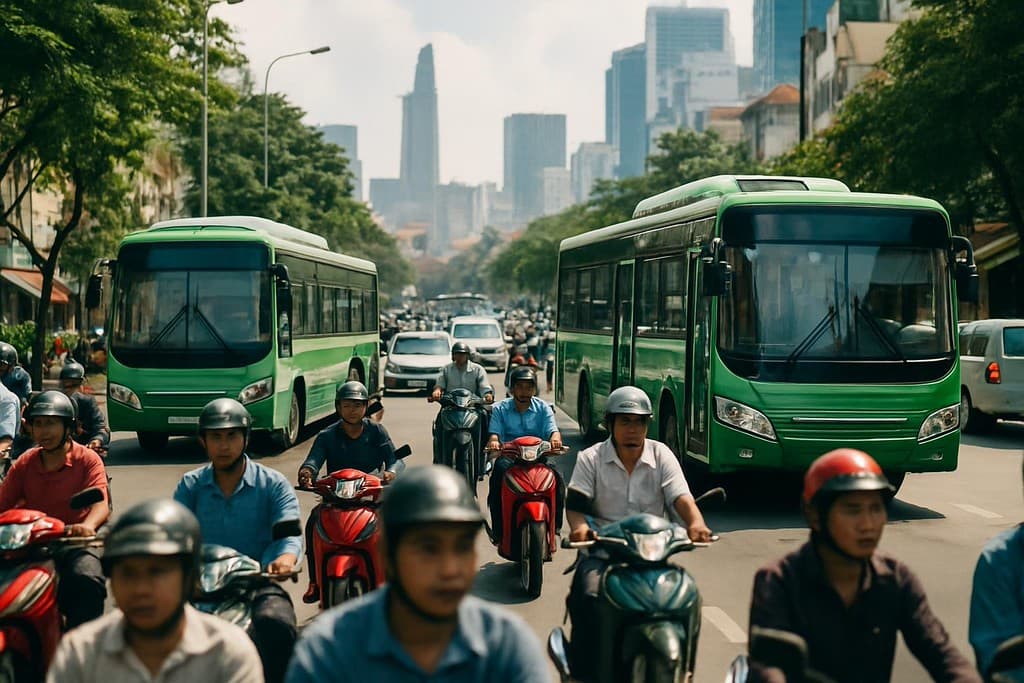
Ho Chi Minh City Transport Guide
Ho Chi Minh City is the bustling heart of Vietnam—a massive, vibrant metropolis that serves as the main gateway for most travelers entering or leaving the country. Whether you’re arriving on an international flight, heading to the coast, or planning an in-depth trip north, this city is a critical transport hub. This guide covers all the ways to get in and out of Ho Chi Minh City, how to reach the city center from the airport, and practical tips for choosing routes and transport options.
Getting from the Airport to the City Center
Tan Son Nhat International Airport is Vietnam’s busiest airport. Conveniently, it’s just about 7 km from downtown Ho Chi Minh City—a big plus for travelers looking for a quick transfer.
Main transfer options:
- Taxi: The fastest and most comfortable choice, especially if you have luggage. Journey time: 20–40 minutes, depending on traffic.
- Bus: Routes 109 and 152 are the budget-friendly options, departing every 20–30 minutes. Ideal if you’re traveling light and want to save money.
- Private car/shuttle: Bookable in advance via Bookaway or 12Go—perfect for families or late-night arrivals.
Insider tip: During rush hours (morning and late afternoon), traffic jams are common. If you’re short on time, consider pre-booking a driver who knows alternative routes.
Leaving Ho Chi Minh City: Where Next and How?
The city is a great base for exploring the rest of Vietnam. Here are the main destinations and the recommended ways to get there:
1. Ho Chi Minh City – Hanoi
The most popular route for travelers crossing Vietnam from south to north.
- Train: A classic Vietnamese experience. Daily departures, various comfort levels. Book tickets in advance via Omio or Rail Europe.
- Overnight bus: Cheaper but less comfortable for long journeys. Bookaway and 12Go offer plenty of options.
- Flight: Very frequent and ideal if you want to save time.
Key insight: The overnight train is an experience in itself, but it’s a long journey (around 30 hours)—best for those who enjoy the ride, less so if you’re in a hurry.
2. Ho Chi Minh City – Da Nang
Central Vietnam is a must-see, especially if you plan to visit Hoi An.
- Train: A scenic and relaxing way to reach Da Nang, with stunning coastal views.
- Flight: Fast and popular, with frequent departures.
Recommendation: If you’re not in a rush, the train journey is one of the most beautiful in Vietnam—book a window seat for the views.
3. Ho Chi Minh City – Hoi An
This charming ancient town is mainly accessed via Da Nang.
- Flight or train to Da Nang + taxi or bus: Fly or take the train to Da Nang, then continue to Hoi An with a short transfer.
- Direct bus: Direct buses exist, but the journey is very long.
Tip: The fastest and most comfortable option is flying to Da Nang and taking a taxi—this saves you hours on the road.
4. Ho Chi Minh City – Da Lat
A popular mountain town, known for its cooler climate and European feel.
- Bus/van: Bookaway and 12Go offer frequent departures, with a journey time of about 8 hours.
- Flight: Especially worthwhile during peak tourist seasons.
Seasonal note: During the rainy season (June–September), mountain roads can be slippery—opt for a flight if available.
5. Ho Chi Minh City – Phu Quoc
A tropical island paradise in southwest Vietnam.
- Flight: The quickest and most efficient way, with many direct flights.
- Bus + ferry combo: Take a bus to Rach Gia or Ha Tien, then a ferry to Phu Quoc with Direct Ferries or Ferryhopper.
Editorial tip: If you’re prone to seasickness or traveling with young children, flying is a better choice—the ferry can be bumpy in rough weather.
6. Ho Chi Minh City – Mui Ne
A beach town renowned for surfing, sandy dunes, and laid-back vibes.
- Direct bus: The simplest option—4–5 hours by bus. Bookaway and 12Go cover this route.
- Private car: Cost-effective for groups or families.
Insight: Catch an early morning bus—the road fills up quickly by midday, especially on weekends.
7. Ho Chi Minh City – Nha Trang
A lively beach city with vibrant nightlife.
- Train: Comfortable and straightforward, with different cabin classes. Omio.
- Bus or van: Frequent departures, travel time 8–10 hours.
Pro tip: The overnight train lets you rest and arrive refreshed for a beach day—less hassle, more energy.
8. Ho Chi Minh City – Sapa
Northern mountain villages, a must for nature lovers.
- Combined route: Fly to Hanoi, take the train to Lao Cai, then a van to Sapa.
- Direct bus: Not recommended from Ho Chi Minh City—the trip is extremely long.
System insight: For the far north, combining a flight and train saves you significant time and keeps you energized.
Other Major Connections
- Ho Chi Minh City – Ha Long Bay: Recommended via Hanoi, then train or bus onward. Ideal for island cruises.
- Ho Chi Minh City – Quang Ninh: Good for reaching the mining and natural areas in the northeast.
- Ho Chi Minh City – Ninh Binh: Popular for cycling tours, rural scenery, and river landscapes.
- Ho Chi Minh City – Cat Ba Island: Classic adventurous route combining flights, trains, and ferries.
Practical Summary
Ho Chi Minh City is an excellent starting point for any destination in Vietnam. There are varied transport options to every region—train, flight, bus, and even ferries. Pay attention to the long distances and balance comfort, price, and experience when choosing your route. Don’t forget to book tickets in advance during peak seasons, especially for trains and flights.
Traveling in Vietnam is part of the adventure—choose the route and mode of transport that best fits your schedule, comfort, and sense of adventure.
Key Route Links:
- Ho Chi Minh City – Hanoi
- Ho Chi Minh City – Da Nang
- Ho Chi Minh City – Hoi An
- Ho Chi Minh City – Da Lat
- Ho Chi Minh City – Phu Quoc
- Ho Chi Minh City – Mui Ne
- Ho Chi Minh City – Nha Trang
- Ho Chi Minh City – Ha Long Bay
Choosing the right way to leave the city is just as important as your next destination.
** Ho Chi Minh City Transport Guide: Routes, Trains & Flights
** Plan your trip with the Ho Chi Minh City Transport Guide. Find routes, trains, buses, and flights to top destinations across Vietnam.