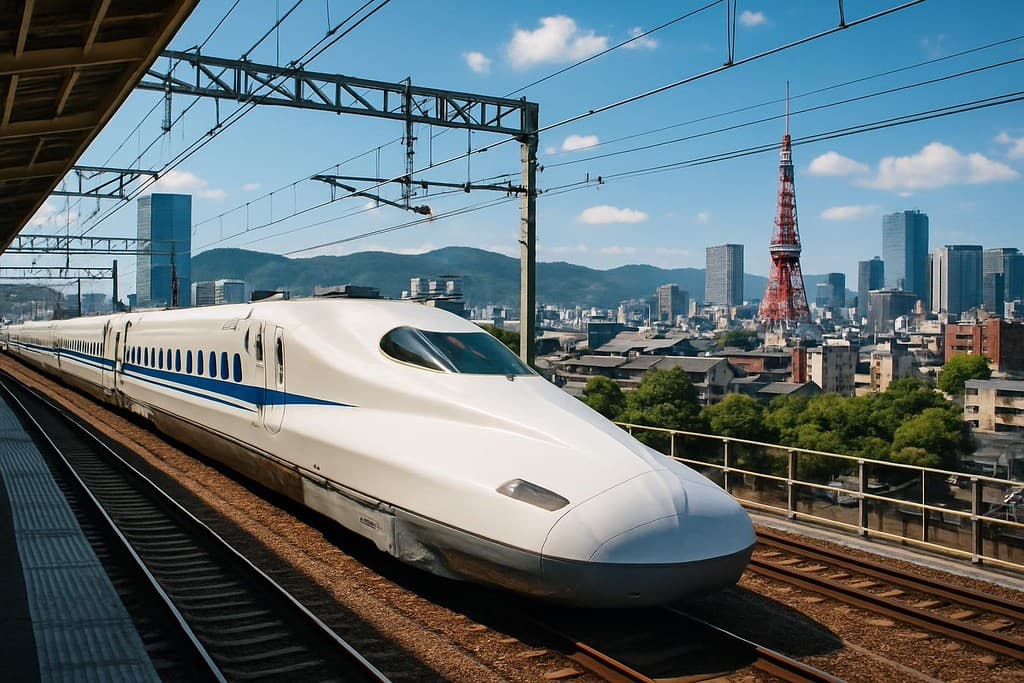
# Japan Golden Route — Tokyo, Kyoto, Osaka

The classic Japan itinerary connects Tokyo, Kyoto, and Osaka — the perfect blend of vibrant city life, traditional culture, and world-class cuisine. The Golden Route takes you through the heart of Japan, offering a comprehensive experience of modernity, history, scenic landscapes, and the rich Japanese culture.
This guide outlines a recommended route, transport options for each leg, and practical tips to help you make the most of every day.

---

## Planning the Route: Structure and Logic

Most international travelers arrive in Tokyo (usually via Narita Airport) and depart from there, or finish in Osaka (with international flights from Kansai Airport).
Recommended itinerary:
1. Start in Tokyo (with an optional day trip to Nara or Hiroshima if time allows)
2. Transfer to Kyoto
3. Short ride to Osaka
4. Optional: Excursion to Nara or Hiroshima
5. Depart from Osaka or return to Tokyo

The main advantage: every segment is easily and comfortably traveled by shinkansen (bullet train) — it saves time, is extremely reliable, and is a quintessential Japanese experience.

---

## Arrival in Tokyo: Starting Your Journey

Most international flights land at [Narita Airport](/places/narita-airport), about 60 km from central Tokyo. The main ways to reach the city center:
- **Narita Express Train** — Runs every 30 minutes, connects to major stations in Tokyo.
- **Keisei Skyliner Train** — A fast option to Ueno, convenient if you’re staying in the northern part of the city.
- **Limousine Bus** — Great for those who prefer a comfortable seat and easy luggage handling straight to the hotel.

Advance booking via [Omio](/routes/narita-airport-tokyo) or [12Go](/routes/narita-airport-tokyo) is recommended during spring and autumn, when demand is highest.

**Editorial Insight:** Train frequency drops late in the evening. If you land late, consider staying overnight near Narita or taking a taxi (very expensive).

---

## Tokyo: The City That Never Sleeps

Spend at least 3–4 days in Tokyo to explore temples, modern neighborhoods, markets, and shopping districts.
From here, you’ll continue to Kyoto.

---

## Tokyo to Kyoto: The Classic Shinkansen Ride

The fastest, smoothest, and most comfortable way is by shinkansen (bullet train).
- Tokyo → Kyoto — Extremely frequent service, trains depart every 10–20 minutes.
- Book via Rail Europe, [Omio](/routes/tokyo-kyoto), or [12Go](/routes/tokyo-kyoto).

**Tips:**
- Reserve a seat (Reserved Seat) during busy seasons (March–May, October–November).
- Consider a JR Pass if you plan to take additional long-distance journeys (like Hiroshima or Nara).

**Editorial Insight:** The ride itself is a highlight — clean, quiet, punctual, and on clear days you can see Mt. Fuji (sit on the right side heading south).

---

## Kyoto: The Cultural Heart of Japan

Kyoto is a city of ancient temples, picturesque streets, and breathtaking gardens.
Plan for at least 2–3 days, including a day to visit Gion, Fushimi Inari Shrine, and the Arashiyama Bamboo Forest.

### Kyoto to Osaka

A quick 15–30 minute trip by regular or high-speed train.
- Kyoto → Osaka — Trains run extremely frequently, almost every 10 minutes.

Other booking options:
- [Kyoto → Osaka](/routes/kyoto-osaka) via 12Go
- [Kyoto → Osaka](/routes/kyoto-osaka) via Omio
- Kyoto → Osaka via Bookaway

**Editorial Insight:** No need to splurge on the shinkansen for this leg; regular trains are much cheaper and only slightly slower.
Choose your departure and arrival stations based on your accommodation (Kyoto Station, Osaka Shin-Osaka or Namba).

---

## Osaka: Youthful Energy and Culinary Delights

Osaka offers a different vibe — more relaxed than Tokyo, with plenty of street food, markets, and nightlife.
Spend at least 1–2 days.
From here, you can take a day trip to Nara or, if you have extra time, visit Hiroshima.

---

## Day Trip to Nara — Between Kyoto, Osaka, and Nara

Nara is ideal for a half or full-day visit — famous for its deer park, Todai-ji Temple, and rural atmosphere.
Especially recommended during cherry blossom or autumn foliage seasons.

Getting there:
- Kyoto → Nara
- Kyoto → Nara
- Kyoto → Nara
- Osaka → Nara
- Osaka → Nara

**Editorial Insight:** Trains from Kyoto are fast and affordable; book a seat in peak hours if possible.
Set out early in the morning — the park is quieter and less crowded with tour groups.

---

## Advanced Option: Hiroshima

If you have an extra day, Hiroshima is easily accessible by bullet train from Kyoto or Osaka.
- Kyoto → Hiroshima
- Osaka → Hiroshima
- Kyoto → Hiroshima

**Editorial Insight:** For a single day, focus on the Peace Memorial Park and Miyajima Island (ferries depart from the station — check schedules at Direct Ferries).

---

## Returning: Osaka or Tokyo?

### Departing from Osaka

If your flight leaves from Osaka, Shin-Osaka Station connects directly to Kansai Airport via the Haruka Express train.
Osaka → Narita Airport — Less common, as most international flights depart from Kansai.

### Returning to Tokyo

If you want to return to Tokyo:
- Osaka → Tokyo
- [Osaka → Tokyo](/routes/osaka-tokyo)
- [Osaka → Tokyo](/routes/osaka-tokyo)

**Editorial Insight:** The shinkansen takes about 2.5–3 hours, making it faster overall than a domestic flight — especially on direct lines.

---

## Budget Planning: How to Get It Right

**Transport**
- Shinkansen: A single trip Tokyo–Kyoto/Osaka costs about $100–$120.
- Regular trains between cities (Kyoto ↔︎ Osaka, Osaka ↔︎ Nara): $5–$20.
- JR Pass: Worth it if you plan multiple long-distance trips (such as including Hiroshima).

**Advance Booking**
- During peak seasons (cherry blossoms, autumn leaves), book at least 1–2 weeks ahead, especially for reserved seats on the shinkansen and for your first journey from the airport.

**Choosing a Booking Platform**
- Rail Europe and [Omio](/routes/tokyo-kyoto): Easy to use in English, reliable customer support.
- [12Go](/routes/tokyo-kyoto): Sometimes offers deals and lower fees.
- Bookaway: Good for buses or less common routes.

**Editorial Insight:** Trains in Japan are punctual to the minute. Being late can mean missing your train, so allow reasonable time buffers between connections.

---

## Summary: Everything You Need for the Golden Route

- **The classic route** — Tokyo > Kyoto > Osaka, with optional stops in Nara and Hiroshima.
- **Best value and convenience** — Use bullet trains; consider a JR Pass for wider circular trips.
- **Book ahead** — Essential during busy seasons, especially for intercity trains.
- **Key decisions** — Choose stations based on where you stay, check train times for mornings and evenings.
- **Japanese advantage** — Public transport is reliable, safe, and impeccably clean.

The Japan Golden Route is the ultimate Japanese experience — blending city life, nature, tradition, and innovation. With smart planning, you’ll enjoy every moment.
** Japan Golden Route: Tokyo, Kyoto & Osaka Transport Guide
** Plan your Japan Golden Route trip with this transport guide. Get tips for trains, routes, and booking between Tokyo, Kyoto, and Osaka.