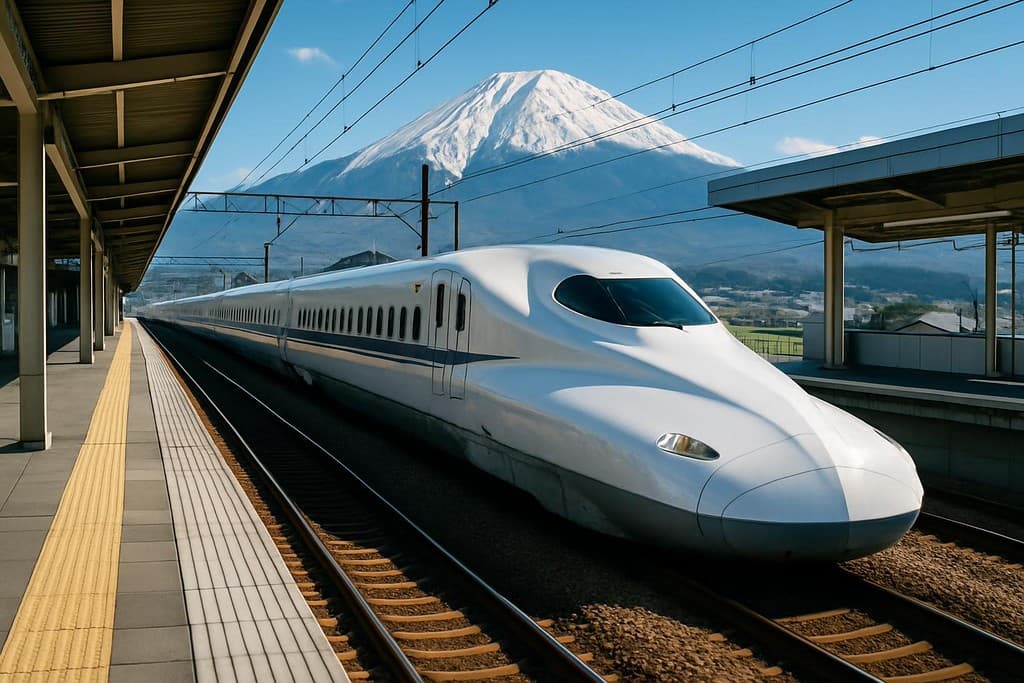
## Japan Rail Guide — Shinkansen, JR Pass & Local Trains

Trains in Japan are more than just transportation — they’re a cultural experience, a symbol of Japanese precision, and often the fastest, most comfortable way to get around the country. Whether you’re traveling between major cities, planning a trip to a smaller town, or just want to experience the speed of the Shinkansen, choosing the right route and ticket will save you both time and money.

### Why Travel by Train in Japan?

- **Exceptional Punctuality**: Japanese trains are world-famous for running on time. Delays are rare and usually very short.
- **Comfort**: Expect air-conditioned carriages, comfortable seats, clean restrooms, and a quiet atmosphere.
- **Extensive Network**: One of the world’s densest train systems, serving everything from metropolitan hubs to remote villages.
- **Easy Airport Access**: Direct train lines connect airports with city centers.

---

## Main Types of Trains in Japan

### Shinkansen — The Bullet Train

The Shinkansen isn’t just one of the fastest trains in the world; it’s also among the most comfortable and reliable. It links Japan’s major cities along several key routes.

#### Popular Routes:
- [Tokyo – Kyoto](/routes/tokyo-kyoto): The classic route for culture, nature, and food lovers.
- [Tokyo – Hiroshima](/routes/tokyo-hiroshima): Connects the capital to the historic sites of western Japan.
- [Kyoto – Hiroshima](/routes/tokyo-hiroshima): Ideal for combining temples and historical sites.
- [Tokyo – Osaka](/routes/tokyo-osaka): The busiest line, with especially frequent trains.
- [Osaka – Hiroshima](/routes/tokyo-hiroshima): An efficient way to reach western Japan’s attractions.

**Expert Insight**: During peak hours, it’s worth reserving a seat in advance — especially for trips between Tokyo, Kyoto, and Osaka. Note that Nozomi trains are the fastest Shinkansen services but are not included with the JR Pass.

---

### Regular and Local JR Trains

Beyond the Shinkansen, the JR (Japan Railways) network operates regular, regional, and local trains.

#### Useful Routes:
- [Kyoto – Nara](/routes/kyoto-osaka): A quick trip to the famous town of deer and giant Buddhas.
- [Tokyo – Nara](/routes/tokyo-nara): A great option for those wanting a longer day journey.
- Osaka – Nara: One of the easiest ways to do a day trip.

**Expert Insight**: Local trains can get crowded during rush hours, especially Monday to Friday in the mornings and late afternoons. For short rides, seat reservations are usually unnecessary.

---

### Airport Trains

Japan’s airport train services are efficient and operate most of the day.

#### Main Routes:
- [Narita Airport – Tokyo](/routes/narita-airport-tokyo): Combines the fast Narita Express with regular trains.
- [Narita Airport – Kyoto](/routes/narita-airport-tokyo): Usually involves a transfer in Tokyo or onto the Shinkansen.
- [Narita Airport – Osaka](/routes/narita-airport-tokyo): A long but relatively direct route, perfect for those heading west.

**Expert Insight**: Narita Express trains are well-synced with international flight schedules, but late-night train service is limited or nonexistent — always check schedules in advance.

---

## Train Operators & Booking Options

### Main Train Operators

- **Japan Railways (JR)** – The main operator covering most of the country, including the Shinkansen and local trains.
- **Regional Companies** – Many belong to the JR Group, but there are also private lines, especially in urban areas.

### Online Booking Platforms

- [Omio](https://www.omio.com/) – International platform with English interface, allows route comparisons.
- [12Go](https://12go.asia/) – Offers intercity trains and bus combinations, easy to use.
- [Bookaway](https://www.bookaway.com/) – Specializes in train and bus tickets, simple booking process.
- [Rail Europe](https://www.raileurope.com/) – Sells international tickets, including the JR Pass.

**Expert Insight**: Using international booking platforms is helpful if you don’t speak Japanese, and they allow easy comparison of options. Always keep both digital and printed copies of your booking confirmation.

---

## JR Pass — When It’s Worth It & How to Use

The JR Pass is an unlimited travel ticket giving access to nearly all JR trains, including most Shinkansen, for 7, 14, or 21 days.

### Advantages:
- **Significant Savings**: Even just traveling between Tokyo, Kyoto, and Hiroshima, you’ll save compared to buying individual tickets.
- **Simplicity**: Just show your pass and board — no advance seat reservation needed for most trains.
- **Flexibility**: Especially useful if you plan to visit multiple cities.

### Drawbacks:
- **Does NOT cover Nozomi (the fastest Shinkansen)** on the Tokyo–Kyoto–Osaka route.
- **Must be purchased in advance before arriving in Japan** (or via booking sites, with airport pickup).

### Example Routes Where JR Pass Pays Off:
- [Tokyo – Kyoto](/routes/tokyo-kyoto)
- [Tokyo – Hiroshima](/routes/tokyo-hiroshima)
- [Kyoto – Hiroshima](/routes/tokyo-hiroshima)
- [Osaka – Hiroshima](/routes/tokyo-hiroshima)
- [Tokyo – Nara](/routes/tokyo-nara)

**Expert Insight**: If you’re spending most of your time in one city, the JR Pass is less worthwhile. For cross-country trips, it’s almost essential.

---

## Buying Train Tickets — What You Need to Know

### Ways to Buy

- **Advance Online Booking**: Via Omio, 12Go, Bookaway, or Rail Europe — convenient, English interface, peace of mind.
- **In Japan**: At ticket machines or JR counters, often with English menus. JR Pass must be collected in person.
- **Seat Reservations**: Required on some trains (especially Shinkansen during peak seasons), available online and at stations.

### Smart Booking Tips

- Reserve in advance during cherry blossom (spring) and autumn foliage (fall) seasons — trains fill up quickly.
- Check ahead for busy routes like [Tokyo – Osaka](/routes/tokyo-osaka) and [Kyoto – Nara](/routes/kyoto-osaka).
- For short trips (under an hour), reservations are less critical unless traveling at peak times.

---

## Price Ranges

- **Shinkansen**: Typically ¥3,000–¥6,000 for short trips, ¥12,000–¥22,000 for Tokyo–Hiroshima. The JR Pass pays for itself with just 2–3 intercity journeys.
- **Local Trains**: Usually a few hundred yen per ride.
- **JR Pass**: Check current prices on booking sites — costs vary by pass type.

**Expert Insight**: Children under 6 travel free on JR trains but are not guaranteed their own seat.

---

## Comfort, Reliability & Travel Experience

- **Quiet Etiquette**: Phone calls are not allowed, and most passengers remain very quiet.
- **WiFi**: Available on some Shinkansen trains and at major stations.
- **Station Facilities**: Major stations offer luggage storage, convenience stores, hot meals, and even showers.

**Expert Insight**: With large suitcases (over 160cm in total dimensions), you’ll need to reserve a special seat area in advance on Shinkansen trains.

---

## Popular Routes — Direct Links

- [Tokyo – Kyoto](/routes/tokyo-kyoto)
- [Tokyo – Osaka](/routes/tokyo-osaka)
- [Tokyo – Hiroshima](/routes/tokyo-hiroshima)
- [Kyoto – Hiroshima](/routes/tokyo-hiroshima)
- [Kyoto – Nara](/routes/kyoto-osaka)
- [Osaka – Hiroshima](/routes/tokyo-hiroshima)
- Osaka – Nara
- [Narita Airport – Tokyo](/routes/narita-airport-tokyo)
- [Narita Airport – Kyoto](/routes/narita-airport-tokyo)
- [Narita Airport – Osaka](/routes/narita-airport-tokyo)
- [Tokyo – Nara](/routes/tokyo-nara)

---

## Practical Summary

Traveling by train in Japan is the safest, fastest, and most pleasant way to get around. For trips of a week or more involving multiple cities, the JR Pass saves money and hassle. It’s smart to reserve Shinkansen seats in advance (especially during busy seasons) and plan your itinerary according to train schedules and distances. Use platforms like Omio, 12Go, Bookaway, or Rail Europe for easy bookings — particularly if it’s your first visit and you want a smooth experience.
** Japan Rail Guide: Shinkansen, JR Pass & Local Train Travel
** Complete Japan rail guide: Shinkansen, JR Pass, local trains, routes, prices, and booking tips for international travelers. Everything you need to ride Japan’s trains.