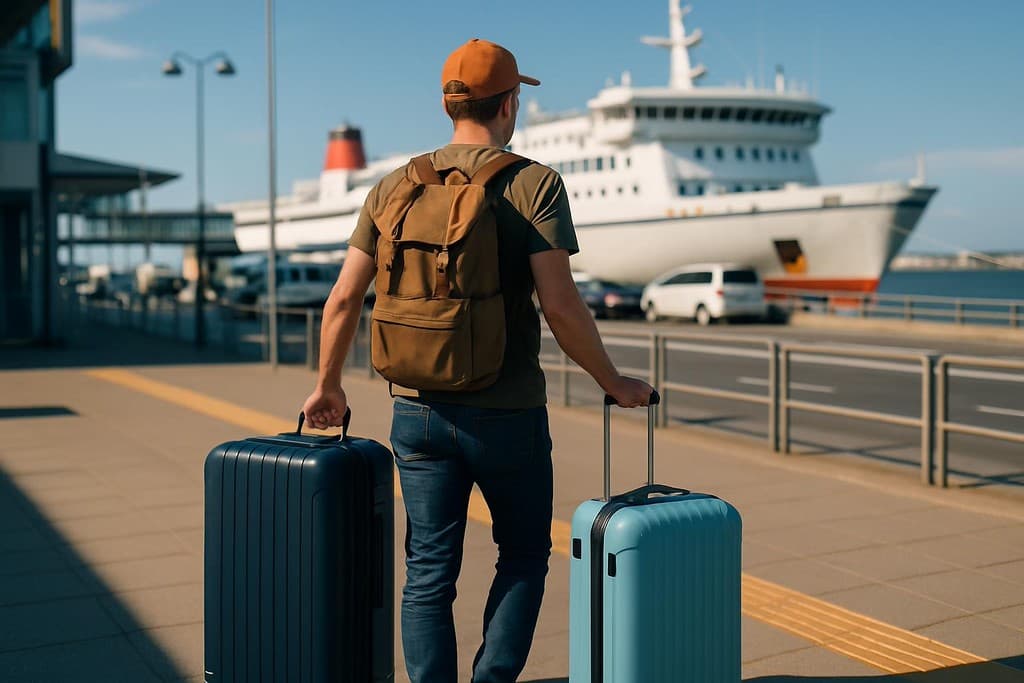
# Luggage Rules by Transport Mode: What You Need to Know Before Booking

Planning a trip abroad? One of the biggest surprises for travelers can be how different luggage restrictions are compared to what you may expect from flying. While many are used to taking both a rolling carry-on and a large backpack on flights, train, bus, ferry, and minivan journeys often have different rules—sometimes with extra fees, delays, or simply limited space. Here’s what really matters, with practical tips and direct links to popular routes.

---

## Trains – Convenient and Flexible, But Not Always Unlimited

Trains across Europe and Asia generally allow a medium backpack and a standard suitcase, but there are exceptions that catch travelers off guard, especially during rush hours and on high-speed lines.

- **Weight and Size:** Most trains allow two main items (suitcase + bag), each up to 23 kg (50 lbs), with combined dimensions (length + width + height) of about 160 cm.
- **Where Does the Luggage Go?** Large suitcases are stored on racks near the carriage doors—not always in your direct line of sight. Bring a small lock for peace of mind.
- **What Not to Bring:** Very heavy or oversized items (like sports gear or giant duffels) may not be allowed on board.

**Editorial Insight:**
On Japan’s high-speed Shinkansen trains, like the [Tokyo to Kyoto](/routes/tokyo-kyoto) route, strict luggage rules apply. If you have a large suitcase, book a seat with “large luggage space” in advance—otherwise, you may be restricted to hand luggage only.

For more details and advance booking, see:
- [Tokyo to Kyoto](/routes/tokyo-kyoto)
- [Madrid to Barcelona](/routes/madrid-barcelona)
- [Rome to Venice](/routes/rome-venice)
- Major operators: **Rail Europe**, **Omio**

---

## Buses – Flexible, But Not Always Generous With Extra Bags

Bus travel is especially common in Southeast Asia, Turkey, and other destinations. Policies are usually generous (backpack + suitcase), but some companies limit you to 20–25 kg (44–55 lbs) per person, especially on night buses or tourist-heavy routes.

- **Good to Know:**
Some operators charge extra for every kilo over the limit, particularly on busy routes or in peak season.
- **Where Does the Luggage Go?**
Suitcases go in the undercarriage hold; small bags stay with you.
- **Real-World Tip:**
On Vietnamese buses, such as [Hanoi to Ho Chi Minh City](/routes/hanoi-ho-chi-minh), mark your suitcase with something colorful—luggage can get mixed up at intermediate stops.

For more information:
- [Hanoi to Ho Chi Minh City](/routes/hanoi-ho-chi-minh)
- [Bangkok to Koh Phangan](/routes/bangkok-koh-phangan)
- Operators: **12Go**, **Bookaway**, **Omio**

---

## Ferries – Plenty of Space, But Mind the Fine Print

Ferries typically allow almost any type of luggage, especially on routes in Greece, Indonesia, and Thailand. However, for oversized items (bicycles, surfboards, giant suitcases), always check the specific policy.

- **Common Policy:**
Most ferries let you bring a backpack and suitcase without issue, but sports equipment or unusual items often incur hefty surcharges.
- **Storage Conditions:**
On island ferry routes (like [Santorini to Mykonos](/routes/santorini-mykonos) or [Bali to Gili Islands](/routes/bali-gili-islands)), luggage is usually stored on the lower deck, often unsecured—so be aware.
- **Seasonal Note:**
During summer months, ferries can be crowded, especially on weekends and holidays—arrive early.

For more details:
- [Santorini to Mykonos](/routes/santorini-mykonos)
- [Bali to Gili Islands](/routes/bali-gili-islands)
- [Bali to Lombok](/routes/bali-lombok)
- Operators: **Direct Ferries**, **Ferryhopper**, **Bookaway**

---

## Minivans and Shared Transfers – Space Is Tight!

In minivans and shared transfers—like the [Da Nang to Hoi An](/routes/da-nang-hoi-an) route—space is usually limited to a carry-on or medium backpack per person. Extra luggage often can't be accommodated, so check the provider’s policy before booking.

- **Typical Limit:**
1 small suitcase + 1 personal bag per passenger, with total weight around 15–20 kg (33–44 lbs).
- **Practical Advice:**
If you’re a group or family with lots of luggage, consider booking a private car in advance. Otherwise, you may have to pay for an extra seat just for your bags.
- Key operators: **12Go**, **Bookaway**

---

## Airport Shuttles – Not Like Regular Flights

Airport shuttles (for example, [Narita to Tokyo](/routes/narita-airport-tokyo)) have their own luggage rules: often limited to one suitcase and one bag per person, especially on express shuttles. Oversized or extra luggage? Notify the company in advance.

- **Where It Gets Tricky:**
In the morning rush, luggage space fills up fast.
- **Tip:**
Choose services that let you pre-select “extra baggage” when booking.

For more information:
- [Narita to Tokyo](/routes/narita-airport-tokyo)
- Operators: **12Go**, **Bookaway**, **Omio**

---

## How to Choose and What to Check Before Booking

1. **Identify the transport type and frequency** – bus, train, ferry, minivan, or shared transfer.
2. **Check the booking site for luggage rules** – Are there size/weight limits? Is there a fee for extra bags?
3. **Where is your luggage stored?** – Close by or in a separate compartment? Consider this for valuables or fragile items.
4. **Book space for oversized luggage in advance** – Especially for Shinkansen trains, ferries, and busy buses.
5. **Consider connections** – Will you need to transfer your luggage between different transport modes (e.g., train + ferry)?

---

## Practical Summary

Luggage rules vary widely by country and transport mode—there’s no universal standard like on flights. Always consider your route, the amount and type of luggage you have, and book accordingly—especially for busy destinations or peak seasons. Bring a lock, add a distinctive tag to your suitcase, and keep essentials in a small bag for the journey—especially on trains and ferries.
For specific details, use the links above and book with major providers, who clearly display luggage rules.
** Luggage Rules by Transport Mode: Trains, Buses, Ferries & More
** Understand luggage limits for trains, buses, ferries, and transfers worldwide. Essential tips for international travelers—check before you book!