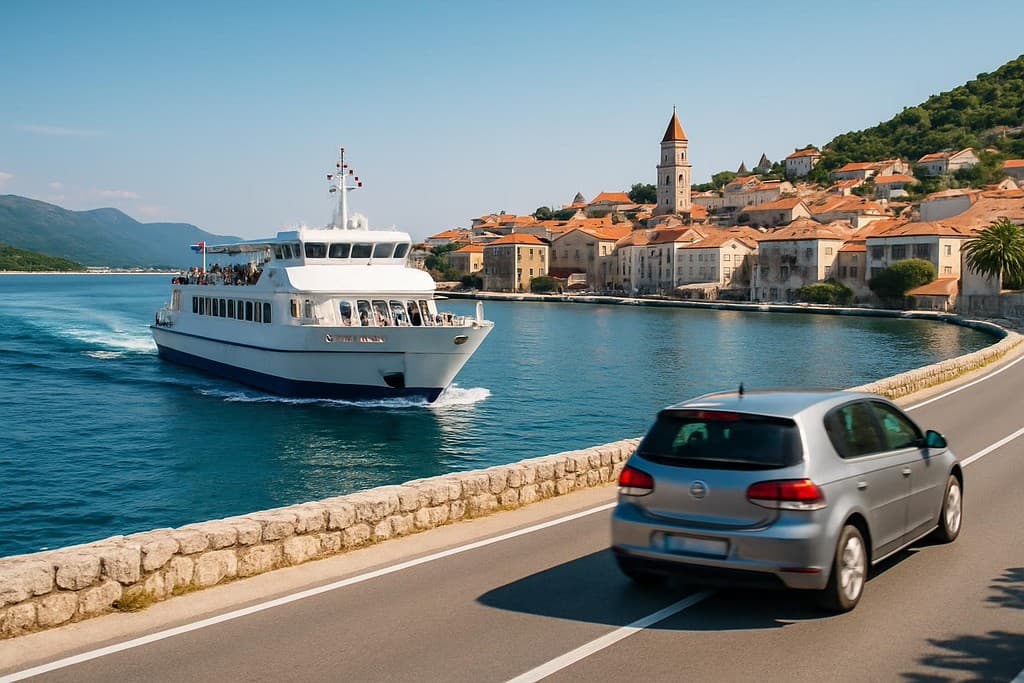
Complete Transport Guide to Croatia
Croatia offers stunning landscapes, historic cities, enchanting islands, and a diverse, traveler-friendly transport network. Whether you’re exploring the Dalmatian coast, hiking through Plitvice Lakes, or hopping between islands, Croatia’s mix of buses, trains, ferries, and car rentals makes getting around easy and accessible. This guide covers how to travel within Croatia, which companies to book with, the pros and cons of each transport method, and highlights some of the most popular routes for visitors.
Land Transport: Buses, Trains, and Car Rentals
Buses – The Backbone of Intercity Travel
Buses are the primary choice for most travelers in Croatia, thanks to their excellent coverage, frequent departures, and access to even small towns. Fast, reliable, and comfortable bus routes connect major cities like Zagreb, Split, Dubrovnik, Rijeka, Pula, and Makarska.
- Booking platforms: Omio, 12Go, Bookaway
- Main advantage: Flexibility, high frequency, central bus stations.
- Main drawback: During peak tourist season, expect crowds and possible delays, especially on routes to the islands and in the south.
Key routes include:
- Zagreb → Plitvice Lakes – The classic route to Plitvice Lakes, with beautiful scenery along the way.
- Split → Dubrovnik – A must for those traveling between the two main coastal cities, takes about 4–5 hours.
- Zagreb → Rijeka – Convenient link from the capital to the northern port city.
Insider tip:
In rural or mountainous areas (such as around Plitvice Lakes), there may be only a few buses per day. It’s best to book tickets in advance, especially in July and August.
Trains – When Are They Worth It?
Croatia's train network is less extensive than its bus system, but trains can be a comfortable, scenic, and affordable option between Zagreb, Rijeka, and Pula.
- Booking platforms: Rail Europe, Omio
- Main advantage: Spacious, peaceful, scenic rides.
- Main drawback: Limited routes and longer journey times.
Notable routes:
- Zagreb → Rijeka – Picturesque ride from east to west.
- Zagreb → Pula – An adventurous route; check schedules and train types.
Insider tip:
Trains can be an experience in themselves, but they’re rarely the fastest option. For destinations in the south (Split, Dubrovnik), train connections are almost nonexistent—buses are recommended.
Car Rental – Maximum Freedom and Flexibility
Renting a car is especially popular with families or groups, letting you stop at any village or off-the-beaten-path spot. Croatia’s highways are modern and well-maintained, signage is clear, and navigation is straightforward.
- Booking options: Directly or via Bookaway/Omio for combined public transport and car hire.
- Main advantage: Total flexibility and access to places unreachable by public transport.
- Main drawback: Parking in cities, fuel/toll costs, and driving restrictions in old towns.
Insider tip:
When traveling to the islands, it’s often not worth bringing a car on the ferry. It’s usually better to drop off your car on the mainland, take the ferry as a foot passenger, and rent a new car on the island if needed.
Ferries – Gateway to the Islands
Croatia’s ferry network is one of the most impressive in the Mediterranean, with fast, regular connections between the Dalmatian coast and major islands like Hvar, Brač, Korčula, and more.
- Booking platforms: Direct Ferries, Ferryhopper, Bookaway
- Main advantage: Incredible views, authentic Croatian experience, especially convenient in summer.
- Main drawback: Schedules vary seasonally; in July and August, booking in advance is essential.
Popular and recommended routes:
- Split → Hvar – The most popular route to the lively and beautiful island of Hvar, about 90 minutes by ferry.
- Split → Bol (Brač Island) – Gateway to the famous Golden Horn beach and excellent hiking.
- Split → Korčula – For a more laid-back, historic island.
- Dubrovnik → Korčula – Highly recommended, especially for northbound island-hopping.
- Split → Makarska – Perfect for combining beach time with mountain excursions.
Insider tip:
High-speed ferries (catamarans) are for foot passengers only, while car ferries are slower and require advance booking for vehicles. In high season, early morning departures are usually the most comfortable and least crowded.
Popular Routes and Combinations
Between Major Cities
Croatia is ideal for combining its “golden cities” along the coast with the capital. Key routes include:
- Zagreb → Split – From the capital to the coast, by bus or train (bus is generally faster).
- Split → Dubrovnik – The classic southern route to Dubrovnik.
Into Nature – Plitvice Lakes
Plitvice Lakes, a must-see destination, is easily reached from major transport hubs:
Insider tip:
Entry to Plitvice Lakes requires advance booking (for both park admission and transport). Buses drop you at the main entrance. Set out early to avoid crowds.
Islands and Unique Destinations – Recommended Itineraries
Bol (Brač Island) and the Golden Horn
The island of Brač is world-famous for Zlatni Rat (“Golden Horn”) beach. Ferries from Split are the way to go:
Insider tip:
In summer, ferries are packed with families and locals. Arrive at the port at least 30 minutes before departure.
Hvar – The Lively Island
Hvar is known for nightlife, beaches, restaurants, and hiking:
Insider tip:
During peak season, book your accommodation on the island in advance—ferries often sell out days ahead.
Korčula – The Quiet Gem
Nicknamed “Little Dubrovnik,” Korčula is accessible from both Split and Dubrovnik:
Insider tip:
Combining these two routes lets you travel across the southern coast, stopping at one of Croatia’s most peaceful islands.
Seasonal Tips and Smooth Travel Advice
- Summer (July–August): Public transport is especially busy—reserve tickets for all modes in advance.
- Winter ferries: Reduced schedules; some routes don’t operate—check with Direct Ferries or Ferryhopper.
- Peak holiday periods: Major destinations and ferries can be crowded—plan ahead.
- Bus vs Train: Buses are usually faster and more efficient, but trains offer a more relaxed journey.
- Booking tickets: Platforms like Bookaway, 12Go, Omio, Rail Europe, Direct Ferries, and Ferryhopper offer easy English-language booking and digital tickets.
Example Itineraries – Popular Transport Combinations
- Zagreb → Split → Hvar, Split → Hvar – Classic combo using bus and ferry.
- Split → Bol (Brač Island) → Bol (Brač Island) → Makarska – Island and coastal adventure.
- Dubrovnik → Korčula → Split, Korčula → Split – Northbound island-hopping.
- Pula → Rijeka – Explore the Istrian peninsula and northern Croatia.
Practical Summary: Getting Around Croatia with Ease
- Between major cities: Buses are the top choice; trains are mostly relevant in the north.
- Between islands: Fast ferries with advance booking combine convenience and experience.
- For self-drive or family trips: Car rental offers freedom, but public transport works well for most.
- Booking: Use leading platforms (Omio, 12Go, Bookaway, Direct Ferries, Ferryhopper, Rail Europe) to secure your spot, especially in high season.
- Recommended routes:
With buses, trains, ferries, and car rentals all available, it’s easy to design your ideal Croatian itinerary—whether you’re into cities, islands, adventure, or nature.
** Complete Transport Guide to Croatia: Routes, Ferries & More
** Discover how to get around Croatia—buses, trains, ferries, car rental, top routes, and booking tips. Your essential Croatia transport guide.