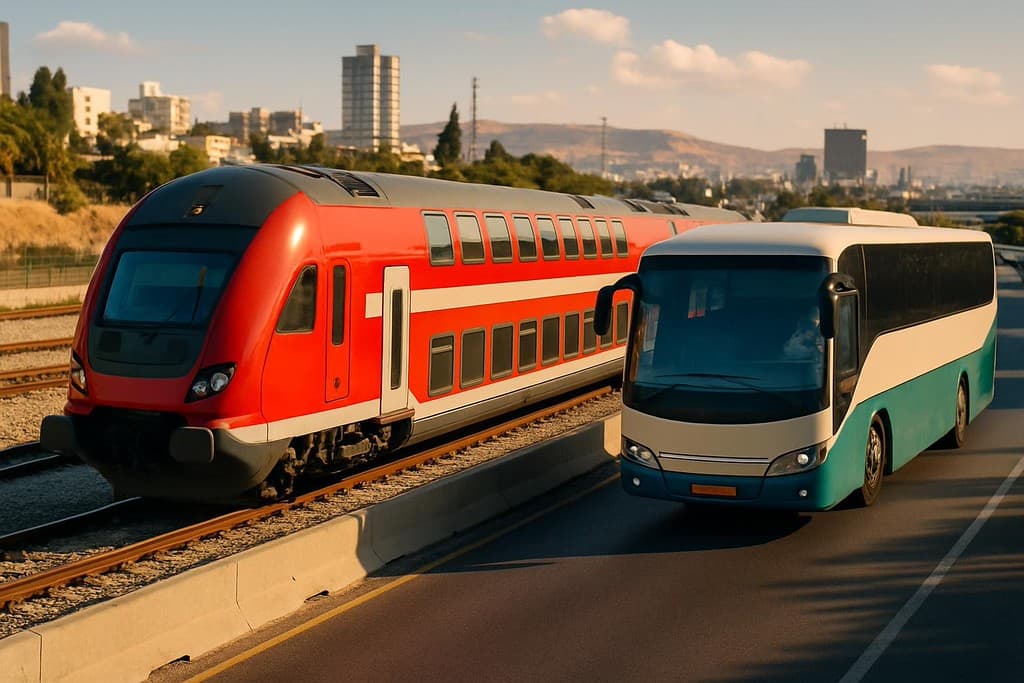
Getting Around Israel
Israel may be small in size, but thanks to its extensive transport network, a variety of options, and advanced route planners, traveling between cities, remote sites, and major attractions is easy and convenient. Whether you’re planning to explore historic Jerusalem, vibrant Tel Aviv, or the warm southern city of Eilat, public transportation and private travel options are widely available. This guide covers everything you need: main routes, service providers, practical tips, and real-world insights.
Intercity Transport: Train, Bus, Car Rental
Trains – Fast Connections Across the Country
Key Lines:
Israel Railways operates modern trains linking Tel Aviv, Jerusalem, Haifa, Be’er Sheva, and other cities. The flagship route is Tel Aviv to Jerusalem, taking just about 35 minutes. There is currently no train to Eilat, though it is planned for the future.
- Pros: Comfortable, fast, fewer delays, central stations near attractions.
- Cons: Limited coverage in outlying areas, no train to Eilat yet.
Editorial Tip:
During rush hours, the train between Tel Aviv and Jerusalem is by far the best choice—avoiding heavy traffic and offering a smooth ride.
For comparing routes, schedules, and booking: Tel Aviv – Jerusalem Train (Omio, Rail Europe).
Buses – Flexible and Comprehensive Coverage
Main Routes:
Israel’s bus network is dense and operated mainly by “Egged”, “Dan”, “Superbus”, and others. Key intercity routes include Tel Aviv–Eilat, Tel Aviv–Haifa, Tel Aviv–Jerusalem, and Jerusalem–Eilat.
- Pros: Extensive geographic coverage, frequent departures, affordable, advance booking via platforms like Bookaway and 12Go.
- Cons: Can be slower than trains, subject to traffic, comfort varies by line.
Editorial Tip:
The Tel Aviv – Eilat Bus is a popular route with several direct daily departures. Book tickets in advance, especially during peak seasons (holidays, summer), and aim for early morning rides for a less crowded journey. Bookaway and 12Go let you compare routes and buy digital tickets.
Car Rental – Freedom to Explore Off the Beaten Path
When to Rent a Car:
If your plans include nature reserves, parks, or small communities outside the major cities, renting a car is worthwhile. Israel’s roads are generally in good condition, signage is in both English and Hebrew, and GPS navigation works reliably.
- Pros: Total flexibility, access to remote sites, stop whenever you like.
- Cons: Expensive parking in cities, rush hour traffic, relatively high fuel prices.
Editorial Tip:
Within Tel Aviv and Jerusalem, public transport is preferable to driving. For trips to the south, especially Eilat, consider renting a car for exploring the region.
For more on southern routes: Jerusalem – Eilat Bus.
Urban Transport: Tel Aviv, Jerusalem, and Eilat
Tel Aviv – Public Transport, Bikes, and Shared Mobility
Tel Aviv offers a range of options: frequent city buses (often crowded), a light rail line (Red Line), shared bikes and e-scooters (Bird, Lime), and shared taxis (“sherut” minibuses that run fixed routes).
- Pros: High frequency, broad coverage, user-friendly apps.
- Cons: Heavy rush hour crowding, paid parking citywide.
Editorial Tip:
In the city center, shared bikes are the quickest and most efficient way to get around. For late-night travel or reaching distant neighborhoods, shared taxis are a budget-friendly choice.
Jerusalem – Buses, Light Rail, and Shared Taxis
Jerusalem’s city and metropolitan buses are operated by “Egged”, with one light rail line (more under construction), and plenty of shared taxis. The city’s hilly terrain can make walking challenging in some areas.
- Pros: Dense route network, “Rav-Kav” smart card works on all public transport.
- Cons: Morning rush hour congestion, visitors often find transfers confusing (use a route-planning app).
Editorial Tip:
Use the light rail for cross-city trips—it’s reliable, comfortable, and offers scenic views on the way to sites like the Old City or Mahane Yehuda Market.
Eilat – Limited Public Transit, Taxis, Car Rental
Eilat is relatively isolated, with limited public transport: infrequent city buses, readily available taxis at reasonable prices, and car rental for exploring the area.
- Pros: Taxis are almost always available, short rides to most city destinations.
- Cons: Buses run irregularly, it’s hard to reach outlying attractions without a car.
Editorial Tip:
For visits to nature reserves, remote beaches, or the Timna Park area, renting a car is the best solution.
For more info: Eilat – Tel Aviv Bus.
Major Routes and Intercity Connections
- Jerusalem – Tel Aviv Train: The fastest and most popular route for both tourists and locals, with frequent departures throughout the day.
- Tel Aviv – Eilat Bus: The cheapest and simplest way to reach Eilat, with stops in Mitzpe Ramon, Be’er Sheva, and Dimona.
- Jerusalem – Eilat Bus: A long but scenic route, especially busy during holidays and vacation periods.
- Eilat – Tel Aviv Bus: The main route north from Eilat; advance booking recommended during busy seasons.
- Tel Aviv – Jerusalem Train: The top choice for business, leisure, and anyone wanting to avoid traffic jams.
Where to Book Tickets?
Main Platforms
- Omio – Compare trains and buses, simple interface, available in multiple languages.
- Bookaway – Intercity bus bookings, including Eilat, with easy search and digital payment.
- 12Go – Intercity routes, detailed information on schedules and operators.
- Rail Europe – Primarily for trains, especially Tel Aviv, Jerusalem, Haifa, and Be’er Sheva.
- Ferryhopper, Direct Ferries – Mainly for ferry services; not regularly active in Israel.
- Trip.com – Train and bus bookings for a global audience.
Editorial Tip:
In most cases, booking in advance through Bookaway or Omio saves time, guarantees a seat, and lets you easily compare options. During peak seasons, don’t count on last-minute tickets—especially for routes to Eilat.
Practical Tips – Make Your Journey Smoother
- Rav-Kav: A rechargeable smart card offering discounts, valid on most public transport (train, bus, light rail, shared taxis).
- Fridays–Saturdays: Public transport shuts down in most cities; plan ahead (some shared taxis still operate).
- Holidays and Peak Seasons: Demand surges—book tickets weeks in advance.
- Apps: Use Moovit or Google Maps for real-time route planning and up-to-date traffic info.
- City Parking: Expensive and hard to find. In city centers, avoid using a private car where possible.
Quick Summary – Choosing the Best Option
- Traveling between major cities: Take the train—fast, comfortable, and traffic-free.
- Heading south (Eilat): Intercity bus is the budget choice; advance booking is essential.
- Within cities: Use public transport, shared bikes, or shared taxis for efficiency.
- Exploring remote areas or nature reserves: Renting a car offers freedom and flexibility.
- Booking tickets: Use Bookaway, Omio, or 12Go for convenience and reliability.
Finally, remember that distances in Israel are relatively short—plan ahead, compare your options, and enjoy the journey as much as the destination.
meta_title_en
Getting Around Israel: Complete Transport Guide
meta_desc_en
Discover how to get around Israel by train, bus, and car. Compare routes, book tickets, and find practical travel tips for major cities and Eilat.