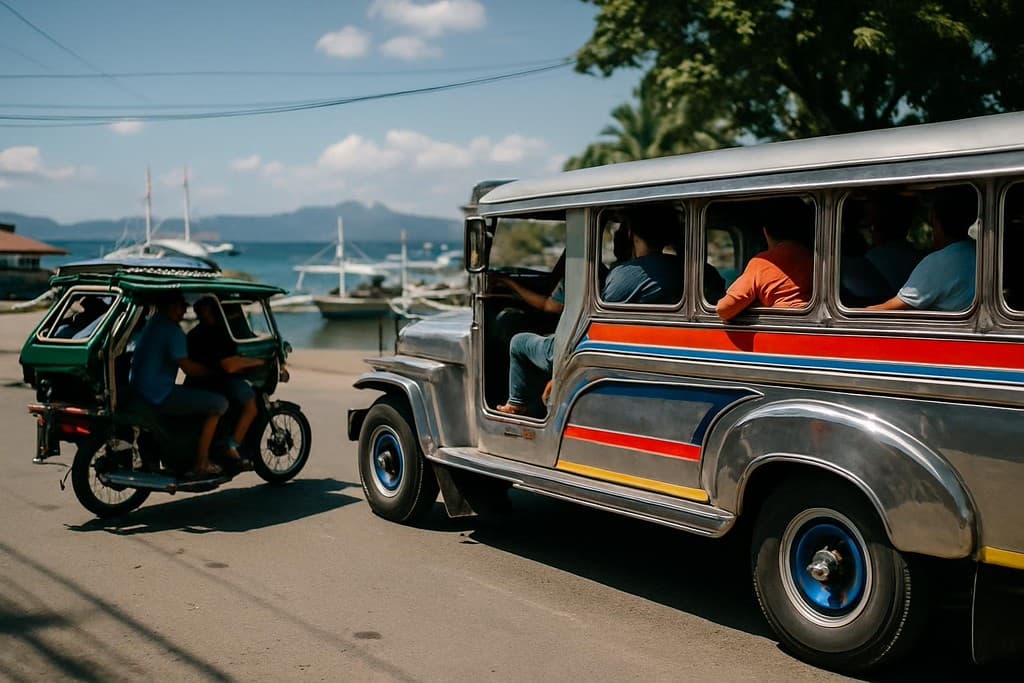
# Complete Transport Guide to the Philippines

The Philippines is an archipelago of thousands of enchanting islands, white sand beaches, towering mountains, and vibrant culture. But getting around—between islands, cities, and rural areas—can be a major challenge for travelers. This guide covers everything you need to know: how to reach every corner, when to choose flights, ferries, buses, or private vehicles, and the most popular routes for international travelers.

## Understanding Philippine Transport – The Basics

With over 7,000 islands, most long-distance travel in the Philippines involves a combination of transport modes: domestic flights, ferries, buses, and private vehicles or shared vans. Major airports are located on the largest islands, while numerous ferries connect neighboring islands. The bus network is most developed in Luzon (the island that includes Manila), and is also present on other large islands.

### Navigating Ticket Booking Systems

- **Domestic flights can't be booked via the platforms listed here, but ferries, buses, and vehicles can**
- The main ticket booking platforms: **12Go, Bookaway, Direct Ferries, Ferryhopper, Omio, Rail Europe**
- Most providers offer easy online booking, digital tickets, and English-speaking support—a big advantage in the Philippines
- During peak season (December–May), book in advance—especially for ferries between popular islands

## Domestic Flights – When Are They Worth It?

Distances between the main islands (such as Manila to Cebu, or Manila to Puerto Princesa) make flying the fastest and most convenient option. However, airports are typically only near major cities, so you may need a taxi or additional ground transport to reach your final destination.

**Key Insight:**
Flights save time, but during the rainy season (June–November), delays and cancellations are common due to tropical weather. In these months, ferries can be a more reliable choice, especially for shorter routes.

## Ferries – The Heart of Island Hopping

Ferries are central to travel in the Philippines. Options range from high-speed vessels and roll-on/roll-off ships (for vehicles and passengers), to overnight ships with sleeping cabins.

### Main Ferry Routes

- **[Manila → Coron](/routes/manila-coron)** – The go-to route for beach and diving enthusiasts. Operates several times a week, mainly via Ferryhopper and Direct Ferries. The journey is long (12–15 hours), but the seascape is stunning. Upgrade to a sleeping cabin if available.
- **[El Nido → Coron](/routes/el-nido-coron)** – A must for travelers in Palawan. Fast ferries depart several times a week, with a sailing time of about 4–5 hours. 12Go, Bookaway, and Ferryhopper list all options.
- **[Cebu → Bohol](/routes/cebu-bohol)** – One of the busiest routes in the country. Short trip (about two hours), with multiple daily departures. Advance booking is essential during peak season.
- **[Dumaguete → Siquijor](/routes/dumaguete-siquijor)** – Ideal for those seeking tranquil, less-traveled islands. Bus-and-ferry combos are available, making this route much faster than flying.

**Key Insight:**
Don’t expect European-style punctuality. Ferry delays are common, especially during the rainy season. If you have a connecting flight, leave at least half a day between your ferry arrival and your flight.

## Buses and Vans – Reaching Inland Destinations

The bus and van network on Luzon (the main island) and larger islands like Cebu, Bohol, and Negros offers an affordable and efficient way to travel between towns and cities. Vans (often called "Coasters" or minivans) are faster than buses but can be cramped and less comfortable for long journeys.

### Main Bus Routes

- **[Manila → Baguio](/routes/manila-baguio)** – Popular for mountain getaways. Air-conditioned buses, 5–7 hours travel time, with frequent departures including overnight options.
- **[Manila → Banaue](/routes/manila-banaue)** – The quickest way to the famous rice terraces. 8–10 hours by bus, with night buses saving you a night’s accommodation. Bring warm clothes—air conditioning can be intense.
- **[Baguio → Sagada](/routes/baguio-manila)** – A scenic mountain route by van or minibus. The road is winding—those prone to motion sickness should prepare accordingly.

**Key Insight:**
Despite frequent departures, seats on popular buses (especially overnight ones) sell out quickly, particularly on weekends and holidays. Book in advance if you want to secure a spot.

## Private Cars and Car Rental – For Experienced Travelers Only

Renting a car is less common among tourists due to road conditions, city traffic, and chaotic driving that can be challenging if you’re not used to it. However, on islands like Luzon and Clark, a private car gives you maximum flexibility—especially for families or groups.

**Key Insight:**
In many areas, hiring a car with a local driver is the standard. It’s a convenient solution, letting you enjoy the scenery without worrying about navigation or unfamiliar traffic rules.

## Popular Route Combinations – Smart Itinerary Planning

Travel in the Philippines almost always means combining several types of transport. Here are some efficient and recommended combinations:

- **Palawan Adventure:**
  Travel from Puerto Princesa north to El Nido, then take a ferry to [Coron](/routes/el-nido-coron). A classic route, but it requires coordinating bus and ferry schedules.
- **Central to Southern Philippines:**
  Take the [Cebu → Bohol](/routes/cebu-bohol) ferry, then use a bus or van to reach Kawasan Falls, and continue by ferry to [Siquijor](/routes/dumaguete-siquijor).
- **Northern Luzon Circuit:**
  [Manila → Baguio](/routes/manila-baguio), [Baguio → Sagada](/routes/baguio-manila), then loop back via [Banaue](/routes/manila-banaue) for a mountain adventure.

**Key Insight:**
Transfers between different transport types (like reaching ferry terminals or switching buses) aren’t always straightforward. Don’t rely solely on digital schedules—double-check departure and arrival times, and leave buffer time, especially when heading to an island with pre-booked accommodation.

## Booking Platforms – Pros and Cons

- **12Go and Bookaway** – The most user-friendly sites, with clear English interfaces, a wide range of routes, and frequent cancellation options.
- **Direct Ferries and Ferryhopper** – Specialists in ferries, usually with up-to-date schedules and ticket classes (standard, VIP, sleeping cabin).
- **Omio and Rail Europe** – Less relevant for Philippine domestic routes, but sometimes feature unique lines or deals.
- **Seasonal Tip:** Around major holidays (like Easter and Christmas), ferry tickets sell out days in advance—always check availability at least two weeks ahead.

## Practical Tips and Warnings

- **Advance Booking Is Essential:** Don’t count on buying tickets at the station, especially for ferries between popular islands.
- **Punctuality Isn’t Guaranteed:** Allow for several hours’ buffer, especially before connecting flights.
- **Comfort on Long Journeys:** Choose sleeping cabins or VIP seats for overnight trips. It makes a huge difference in rest and experience.
- **Watch the Weather:** During the wet season, ferry cancellations are possible—avoid planning a tight itinerary.
- **Baggage:** Some fast ferries have strict weight limits—check ahead to avoid surprises.

## Sample Main Routes with Links

- [Manila → Baguio](/routes/manila-baguio) – The classic route for a cool mountain adventure
- [Manila → Banaue](/routes/manila-banaue) – For the unforgettable rice terraces
- [Cebu → Bohol](/routes/cebu-bohol) – For tarsiers, Chocolate Hills, and beaches
- [El Nido → Coron](/routes/el-nido-coron) – The top route for the real Palawan
- [Manila → Coron](/routes/manila-coron) – For adventurous travelers seeking wild beauty
- [Dumaguete → Siquijor](/routes/dumaguete-siquijor) – The route to Siquijor’s peaceful beaches

## Practical Summary

Traveling in the Philippines requires advance planning, combining several transport methods, and a flexible mindset. Platforms like 12Go, Bookaway, Ferryhopper, and Direct Ferries make things much easier—as long as you book ahead and check ferry and bus schedules.
Take the time to review timetables, stay open to changes, and your journey between islands will become less of a logistical challenge and more of an adventure filled with landscapes, culture, and people.
The destinations are waiting—just choose your route and start your journey.
** Complete Transport Guide to the Philippines
** The ultimate guide to getting around the Philippines: flights, ferries, buses, and the best routes for travelers. Plan your island-hopping adventure with ease.