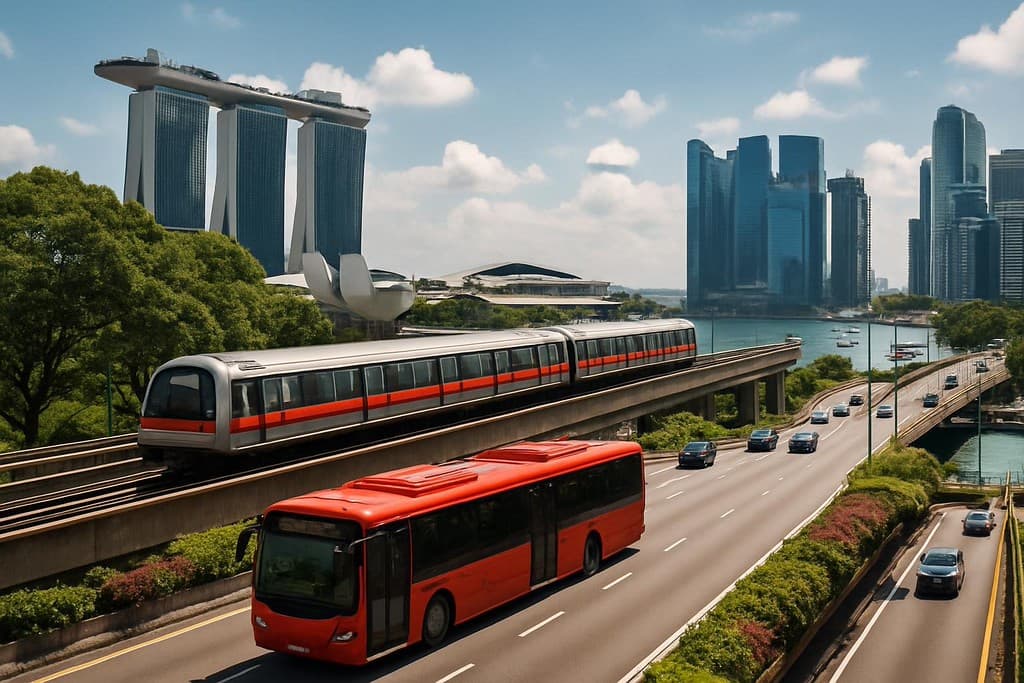
Singapore Transport & Connections
Singapore is a global model for efficient, comfortable, and clean public transport. To make the most of your visit, it’s helpful to know not only how to get around the city-state, but also how to connect onward to Malaysia, Indonesia, and the rest of Southeast Asia. This guide covers all the essentials—transport options, top providers for advance booking, and practical tips—so you can travel smart and smoothly.
Public Transport Within Singapore
MRT Trains – The City’s Backbone
Singapore’s MRT (Mass Rapid Transit) network is among the world’s cleanest, fastest, and most reliable. All major attractions, neighborhoods, the airport, and key stations are well connected.
- Pros: Frequent service, clear signage in English, air-conditioning in every carriage, accessible for travelers with disabilities.
- Tickets: The EZ-Link card can be loaded and used seamlessly across trains, buses, and some taxis.
- Editor’s Tip: Peak hours (8:00–9:30am, 5:30–7:00pm) can get crowded—plan trips outside these times for a calmer ride.
Buses – Reaching Every Corner
Singapore’s dense bus network is a perfect solution for areas not directly served by the MRT.
- Pros: Air-conditioned on all routes, digital signage at stops, affordable fares.
- Cons: Less intuitive for newcomers, especially in outlying neighborhoods.
- Editor’s Tip: Apps like Citymapper or Google Maps provide accurate, real-time routes.
Taxis & Ride-Sharing
Grab and Gojek dominate the ride-hailing scene. Taxis are regulated, safe, and always use the meter.
- Pros: Great for families, travelers with lots of luggage, late-night trips, or less central areas.
- Cost: More expensive than buses or trains, especially during peak hours and weekends.
Land Connections – Singapore, Malaysia & Beyond
Singapore is linked to Malaysia by two bridges: the Causeway (to Johor Bahru) and the Tuas Second Link. Crossing the border involves passport control on both sides.
Bus from Singapore to Johor Bahru
The most popular overland route to Malaysia is the fast bus service connecting central Singapore with Johor Bahru.
- Singapore to Johor Bahru – Frequent departures throughout the day.
- Providers: 12Go, Bookaway, Omio.
- Considerations: You’ll need to disembark twice for immigration. At peak times (especially Friday afternoons and Sunday mornings), border waits can be long.
- Editor’s Tip: For timely arrivals, opt for an early morning or late afternoon departure.
Trains – From Singapore to Malaysia
Direct trains from Singapore no longer operate; the southern station is closed, so journeys start from Johor Bahru.
- Johor Bahru to Kuala Lumpur by Train – A convenient option for heading further north.
- Providers: Omio, Rail Europe, 12Go.
- Editor’s Insight: The train is a calmer, scenic alternative to bus or car.
- Tip: Book tickets in advance, especially during Malaysian holiday seasons.
Ferry Connections – To Indonesia & the Islands
The short sea crossing from Singapore to Indonesian islands makes ferries a popular choice for quick getaways—especially to Batam, Bintan, and Karimun.
Ferries from Singapore to Indonesia
- Singapore to Batam – Multiple daily sailings, about two hours on average.
- Singapore to Bintan – Frequent departures to this popular resort island.
- Providers: Direct Ferries, Ferryhopper, 12Go, Bookaway.
- Editor’s Experience: Ferries are clean and air-conditioned, but book ahead for weekends and holidays as demand spikes.
- Seasonal Tip: During monsoon season (November–February), disruptions or delays can occur—check updates with your ferry operator.
Changi Airport – A Global Air Hub
Singapore’s Changi Airport is one of the world’s most advanced and comfortable, serving destinations across Asia, Australia, Europe, and the Middle East.
- Transport from the Airport: MRT trains, buses, taxis, and Grab all serve the city. The ride to downtown takes 20–30 minutes.
- Providers for onward travel: Omio, Trip.com—combine flights with trains or buses.
- Editor’s Tip: If you have a long layover, Changi offers rest zones, a botanical garden, cinemas, and even a swimming pool.
Getting Around the City – Special Lines & Attractions
Sentosa – Singapore’s Island of Attractions
- Singapore to Sentosa – Access via cable car, monorail, or a dedicated pedestrian bridge.
- Providers: 12Go, Bookaway.
- Editor’s Advantage: The monorail is quick and convenient, but the cable car gives panoramic views—worth the extra cost for at least one leg of the trip.
Marina Bay – The City’s Heart
Easily reached by foot or a short MRT ride from anywhere central—no car needed.
Booking Tickets & Choosing Providers
- Omio, 12Go, Bookaway: Reliable platforms in English for booking land and sea routes, including onward connections.
- Direct Ferries, Ferryhopper: Especially good for ferries, with up-to-date schedules and seat selection.
- Rail Europe: Specializes in train routes, mainly international lines.
- Editor’s Tip: Booking ahead helps secure seats on busy routes, but isn’t always necessary for local city lines.
Practical Summary – Making the Right Choice
Singapore’s public transport is accessible, safe, and efficient—there’s little need to rent a car. Land connections to Malaysia and ferries to Indonesia are straightforward but require some planning: take buses at off-peak times, book ferries in advance for weekends, and use top booking platforms to secure your seat and avoid queues or surprises.
Key Routes for Booking:
- Singapore to Johor Bahru
- Johor Bahru to Kuala Lumpur by Train
- Singapore to Batam
- Singapore to Bintan
- Singapore to Sentosa
For every route, check booking terms, journey times, and whether you need to print tickets. With a little preparation, you’ll enjoy smart, efficient, and stress-free transport in Singapore and beyond.
Singapore Transport Guide: Getting Around & Connections Discover Singapore’s transport options, cross-border links, and top booking tips. Navigate MRT, buses, ferries, and more for a seamless trip.