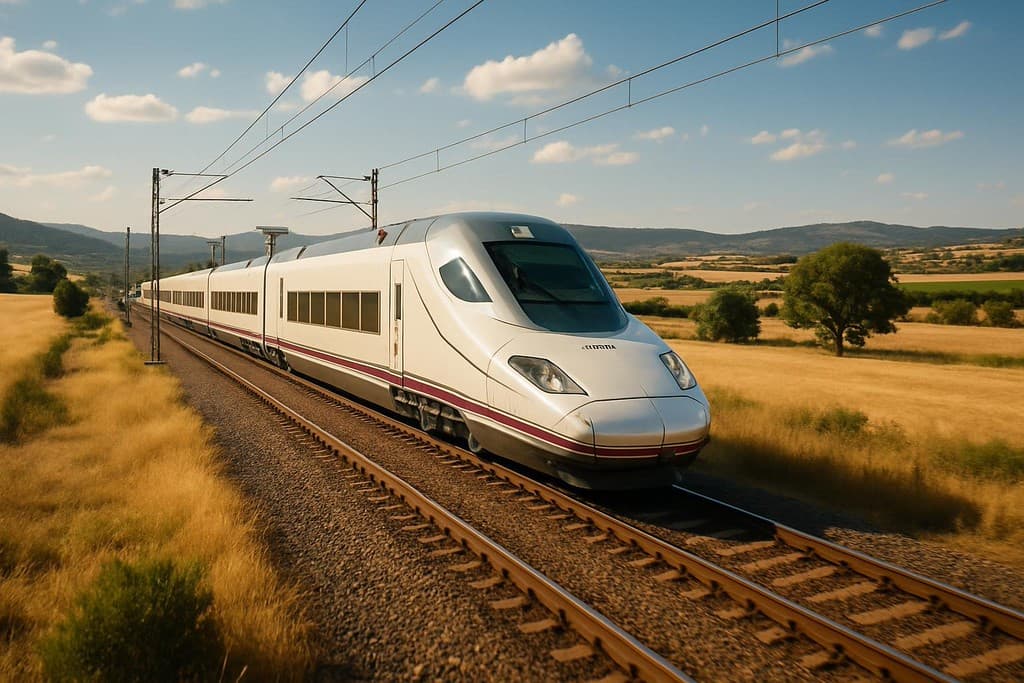
# Complete Transport Guide to Spain

Spain is a diverse country with complex geography, offering travelers a modern and convenient transport network suitable for every travel style—from beautiful coastlines and islands to lively cities and traditional towns. Whether you're planning to hop between major cities, visit the Balearic Islands, or enjoy a culinary tour in the Basque Country, understanding your main transport options, top providers, and popular routes will help you plan efficiently and save valuable time.

## Trains: The Heart of Intercity Travel

### AVE High-Speed Rail – Fast Connections Between Major Cities

Spain’s AVE high-speed trains are among the fastest and most modern in Europe, linking the country’s largest cities with impressive speed and comfort.

**Recommended routes:**
- [Madrid – Barcelona](/routes/madrid-barcelona): The most in-demand line, with frequent departures (every 30–60 minutes). The journey takes about 2.5–3 hours, offering a quiet and comfortable ride—an excellent alternative to domestic flights.
- [Barcelona – Valencia](/routes/barcelona-valencia): Another fast and efficient route, especially popular in summer.
- [Madrid – Seville](/routes/madrid-seville): The classic way to explore Andalusia, with changing scenery along the way.

**Main booking platforms:**
- **Rail Europe** – A reliable and user-friendly platform for purchasing train tickets, with multiple class options.
- **Omio** – Ideal for comparing schedules and prices.
- **Bookaway** – Another option for booking intercity train tickets in advance.

**Insider tip:**
During summer and on weekends, it’s highly recommended to book tickets in advance—seats on popular routes (especially between Madrid, Barcelona, and Seville) sell out quickly. Note that there are different classes (Turista, Preferente), and the price difference can be worth the upgrade for longer journeys.

### Regional and Traditional Trains

Beyond the AVE, regular trains (Media Distancia and Regional) connect smaller cities and mountainous areas.
- [Granada – Cordoba](/routes/cordoba-granada): A scenic route through Andalusia, great for those who prefer a slower pace.
- [Bilbao – San Sebastian](/routes/barcelona-san-sebastian): A popular northern route, especially among food and mountain scenery lovers.

**Advantage:**
These trains are slower but pass through stunning landscapes and allow for stops in traditional towns along the way.

## Buses: Affordable and Flexible

While Spain’s rail network is impressive, buses fill in the gaps, reaching destinations not served by trains or offering a more budget-friendly option.

**Key routes:**
- [Madrid – Granada](/routes/madrid-granada): Efficient and frequent, ideal for travelers looking to save money.
- [Valencia – Malaga](/routes/valencia-barcelona): Connects eastern and southern Spain, perfect for those who want a direct route without train transfers.
- [Seville – Cordoba](/routes/seville-cordoba): A popular way to explore Andalusia.

**Main booking platforms:**
- **Omio** – Excellent for comparing buses and trains, including seat availability.
- **12Go** – Offers intercity bus tickets, sometimes including comfortable overnight buses.

**Good to know:**
Buses in Spain are usually modern and air-conditioned, but not all offer restrooms or WiFi—bring water and snacks, especially for longer trips. On popular routes (especially around holidays and weekends), it’s best to reserve your seat in advance.

## Domestic Flights: When Speed Matters

Spain is a large country, and in some cases, flying can save significant time—especially for long distances or trips to the islands.

**Major routes:**
- [Barcelona – Ibiza](/routes/barcelona-ibiza): A very popular route, especially in summer and on weekends.
- [Madrid – Mallorca](/routes/madrid-malaga): The fastest way to reach the beaches of the Balearic Islands.
- [Barcelona – Malaga](/routes/barcelona-malaga): Connects the north to the southwest, great for a flexible itinerary.

**Main booking platforms:**
- **Omio** – Shows a range of airlines, including low-cost carriers.
- **12Go** – Less common for flights, but sometimes offers deals.
- **Trip.com** – Broad search options, including international flight combinations.

**What to keep in mind:**
Major airports (Madrid, Barcelona, Malaga) are efficient but often located outside the city center—factor in transfer times. Sometimes, a high-speed train will be quicker overall (especially between Madrid and Barcelona).

## Ferries: To and Between the Islands – A Mediterranean Experience

The Balearic Islands (Ibiza, Mallorca) are top destinations for both locals and visitors. Ferries offer a unique way to reach them, combining scenic views, atmosphere, and convenience.

**Popular routes:**
- [Barcelona – Ibiza](/routes/barcelona-ibiza): A romantic crossing, perfect for travelers who want to soak in the island vibe en route.
- [Valencia – Mallorca](/routes/valencia-barcelona): Daily, comfortable sailings, with the option to bring a car.
- [Barcelona – Mallorca](/routes/barcelona-mallorca): A busy route with several competing ferry companies.

**Main booking platforms:**
- **Ferryhopper** – Clear system for ferry ticket bookings.
- **Direct Ferries** – Wide range of options, including user reviews.
- **Bookaway** – Allows for combined bookings with buses or trains.

**Maritime tip:**
From June to September, demand is high and prices rise—book tickets in advance, especially if you want to bring a car or reserve a private cabin. Overnight sailings are very popular, especially with families or groups.

## Urban Transport: Easy Navigation in Cities Large and Small

### Metro, Trams, and Buses

Major cities like Madrid, Barcelona, and Valencia have advanced metro systems, trams, and extensive bus networks.
**Barcelona** offers convenient lines to main attractions, and Madrid boasts one of Europe’s most affordable metro systems.

**Booking options:**
For urban transport tickets, Omio and Trip.com sometimes offer combined travel packages, though locals often buy tickets from vending machines or local apps.

**City tip:**
Most city tickets are rechargeable, and daily or weekly passes offer good value for travelers planning to move around frequently. In smaller cities, urban buses run less often—check timetables in advance.

## Car Rental: Flexibility for Exploring Beyond the Cities

For trips through Andalusia, the Basque Country, or mountainous areas like the Pyrenees, renting a car provides freedom and flexibility. Remember that large city centers are not car-friendly—parking is expensive, low-emission zones are common, and some areas are restricted to authorized vehicles only.

**Booking options:**
Most bookings are made through rental company websites or Trip.com; sometimes, package deals that combine car rental with public transport are worthwhile.

**Pro tip:**
If you plan to combine visits to big cities and rural areas, take the train or fly to the city, then rent a car for your journey into the countryside—this saves parking hassles and avoids fines.

## Popular Intercity Connections – Sample Top Routes

Here are ten of the most popular routes, suitable for a variety of itineraries:

- [Madrid – Barcelona](/routes/madrid-barcelona): Choose between high-speed train, flight, or bus.
- [Barcelona – Valencia](/routes/barcelona-valencia): High-speed train or bus.
- [Madrid – Seville](/routes/madrid-seville): Especially fast AVE train.
- [Barcelona – Ibiza](/routes/barcelona-ibiza): Flight or ferry.
- [Valencia – Mallorca](/routes/valencia-barcelona): Convenient ferry.
- [Barcelona – Malaga](/routes/barcelona-malaga): Train or flight.
- [Bilbao – San Sebastian](/routes/barcelona-san-sebastian): Regional train or bus.
- [Granada – Cordoba](/routes/cordoba-granada): Regular train, beautiful scenery.
- [Seville – Cordoba](/routes/seville-cordoba): Train or bus.
- [Madrid – Granada](/routes/madrid-granada): Bus or train.

## Practical Tips for Planning Transport in Spain

- **Book in advance** – Especially for intercity routes, high-speed trains, and summer ferries.
- **Check schedules** – Operating hours vary by season.
- **Stay flexible** – Sometimes the bus is more affordable and flexible than the train.
- **Combine modes** – Combined tickets (train + ferry, etc.) are available.
- **Use public transport in cities** – Rental cars are best for rural trips; metros and buses are better in city centers.

## Practical Summary

Spain’s transport system is diverse and efficient, catering to every type of traveler. High-speed trains connect major cities, comfortable buses reach towns and villages, domestic flights serve the islands, and ferries offer a Mediterranean experience. Booking platforms like **Rail Europe**, **Omio**, **Bookaway**, **Ferryhopper**, and **Direct Ferries** make planning easy. Mix and match transport modes, book ahead during peak seasons, and use public transport in big cities to ensure a smooth, cost-effective trip without surprises.
** Complete Transport Guide to Spain
** Discover Spain’s transport options: trains, buses, flights, ferries, and car rental. Plan efficient travel with this complete Spain transport guide.