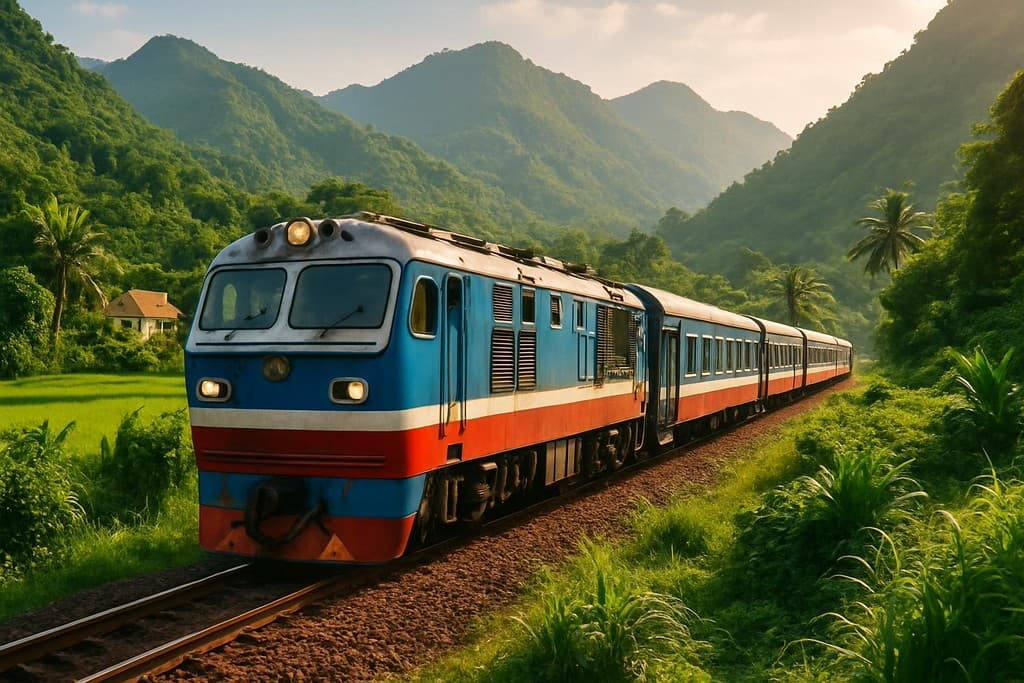
# Complete Transport Guide to Vietnam

Vietnam offers a vibrant and unique travel experience, blending nostalgic trains, comfortable buses, modern ferries to idyllic islands, and local taxis. For international travelers, planning a smart route from north to south — or between cities, villages, and natural attractions — depends on understanding your transport options, the main operators, and how routes and schedules change with the seasons.

## Overview: Getting Around Vietnam

Vietnam stretches over 1,600 km, from the mountainous north around Sapa to the southern beaches near Ho Chi Minh City. Infrastructure is most developed along the main north-south corridor between Hanoi and Ho Chi Minh, but even more remote destinations are well connected by a reliable network of public transport, trains, buses, and ferries.
**Key tip:** Build in generous time buffers — schedule changes and delays are part of the local travel experience.

## Trains: The Classic Way to See Vietnam

The main rail line, known as the "Reunification Express," connects Hanoi and Ho Chi Minh City with stops in major cities like Nha Trang, Da Nang, and Hue.
**Travel experience:** Carriages range from standard seats to air-conditioned sleeper cabins. Booking in advance is recommended, especially during peak tourist seasons.

### Major Train Routes
- [Hanoi to Hue](/routes/hanoi-hue): Scenic journey through lush landscapes, with overnight trains that let you save on accommodation.
- [Hanoi to Sapa (Lao Cai)](/routes/hanoi-lao-cai): The classic route for those heading to trekking destinations in the north.
- [Da Nang to Hoi An](/routes/da-nang-hoi-an): No direct train — usually combined with a short bus or taxi from the station.
- [Nha Trang to Ho Chi Minh City](/routes/ho-chi-minh-nha-trang): Popular for travelers looking to explore Vietnam’s beaches.

**Editorial insight:** Trains are slower than buses but offer a relaxed pace, fantastic scenery, and the chance to meet locals. If you enjoy the journey itself, this is the way to go.

### How to Book?
- **Rail Europe**, **12Go**, and **Bookaway** all offer easy online booking in English.

## Buses: Flexible and Widely Available

Buses are the most affordable and flexible way to travel, with dozens of daily routes connecting cities and rural areas.
**What’s unique:** "Sleeper buses" feature reclining seats or bunks, making long overnight journeys surprisingly comfortable.

### Popular Bus Routes
- [Hanoi to Ninh Binh](/routes/hanoi-ninh-binh): The fastest way to reach Vietnam’s green north.
- [Hanoi to Mai Chau](/routes/hanoi-mai-chau): Ideal for those heading to rural villages and farmland.
- [Da Lat to Mui Ne](/routes/da-lat-mui-ne): A popular transfer from the highlands to the coast.
- [Ho Chi Minh City to Phu Quoc](/routes/ho-chi-minh-phu-quoc): Combined with a ferry ride (see below).

**Editorial insight:** On most routes, buses are surprisingly punctual and often have WiFi. For overnight trips, pack warm clothing — air conditioning can be strong.

### Where to Book?
- **Bookaway** and **12Go** are the top choices, with clear info on vehicle types (sleeper, VIP, etc.).
- **Omio** lets you compare routes and sometimes find special deals.

## Ferries: To the Islands and Ha Long Bay

Vietnam is home to breathtaking islands like Phu Quoc in the south and Cat Ba in the north, all accessible via modern ferries.

### Main Ferry Routes
- [Cat Ba Island to Hanoi](/routes/hanoi-cat-ba-island): A popular way back to the city from the island.
- [Hanoi to Cat Ba Island](/routes/hanoi-cat-ba-island): Combines bus and ferry.
- [Ho Chi Minh City to Phu Quoc](/routes/ho-chi-minh-phu-quoc): Includes a land transfer.
- Nha Trang to Phu Quoc: A sought-after summer route.
- [Da Lat to Ninh Binh](/routes/hanoi-ninh-binh): Connects the highlands to beach areas, sometimes including a ferry section.

**Editorial insight:** On some routes — especially during the rainy season (June to September) — weather can cause delays or schedule changes, particularly for ferries.

### How to Book?
- **Direct Ferries** and **Ferryhopper** are leading options for ferry bookings.
- **Bookaway** and **12Go** offer combined land-sea tickets (bus + ferry).

## Minivans: Flexible Shuttles to Remote Spots

Between villages and mountain towns, minivans (shared shuttle vans) offer efficient connections to places not served by larger buses.

### Key Minivan Routes
- [Hanoi to Mai Chau](/routes/hanoi-mai-chau): The easiest way to reach the rural north.
- [Hanoi to Hoa Binh](/routes/hanoi-hoa-binh): For trips to traditional communities.
- [Sapa to Hanoi](/routes/sapa-hanoi): A faster, more convenient option than the train.

**Editorial insight:** Minivans often pick up and drop off at your hotel or chosen address, but legroom is limited — tall travelers may find them less comfortable.

## Domestic Flights: The Fast Track — But Not Always Essential

For long distances (for example, between Hanoi and Ho Chi Minh City), domestic flights save significant time. However, if your schedule is flexible, traveling by train lets you see more of Vietnam along the way.
**Tip:** During peak seasons (summer, Vietnamese holidays), book flights well in advance.

## Sample Recommended Routes (with Links)

- [Hanoi to Hue](/routes/hanoi-hue): A classic stopover between north and central Vietnam.
- [Hanoi to Sapa (Lao Cai)](/routes/hanoi-lao-cai): The gateway to trekking.
- [Da Nang to Hoi An](/routes/da-nang-hoi-an): A quick hop to the heritage town.
- [Hanoi to Ha Long Bay](/routes/hanoi-ha-long-bay): The gateway to a UNESCO World Heritage site.
- [Hanoi to Cat Ba Island](/routes/hanoi-cat-ba-island): A backpacker favorite.
- [Sapa to Hanoi](/routes/sapa-hanoi): Easy return from the mountains.
- [Da Lat to Ninh Binh](/routes/hanoi-ninh-binh): A unique link between south and north.
- [Nha Trang to Ho Chi Minh City](/routes/ho-chi-minh-nha-trang): For beach lovers.
- [Ho Chi Minh City to Phu Quoc](/routes/ho-chi-minh-phu-quoc): Quick hop to the tropical island.
- [Hanoi to Ninh Binh](/routes/hanoi-ninh-binh): Green countryside close to the city.
- [Hanoi to Hoa Binh](/routes/hanoi-hoa-binh): For authentic villages.
- [Ho Chi Minh City to Mui Ne](/routes/mui-ne-ho-chi-minh-city): From metropolis to beach.
- [Da Lat to Mui Ne](/routes/da-lat-mui-ne): Perfect for changing climates.
- Nha Trang to Phu Quoc: A popular sea route.
- [Quang Ninh to Ha Long Bay](/routes/hanoi-ha-long-bay): Direct access to natural attractions.

## Essential Travel Tips for Vietnam

- **Book ahead:** For popular routes (Sapa, Ha Long Bay), reserve at least a week in advance, especially in high season.
- **Apps:** Download the Bookaway and 12Go apps for easy booking and real-time updates.
- **Language:** Staff usually speak basic English — digital booking confirmations help avoid misunderstandings.
- **Seasonality:** During monsoon season (June–October), expect possible delays, especially for ferries.
- **Night travel:** Bring a warm layer, eye mask, and earplugs for a better night’s sleep on buses and trains.

## Practical Summary: How to Choose the Right Route and Transport?

- **For trekking and nature:** Minivans and buses to Sapa, Mai Chau, Ninh Binh, and Hoa Binh.
- **For islands and beaches:** Ferries often combined with buses — Phu Quoc, Cat Ba, Ha Long Bay.
- **For city-to-city travel:** Overnight trains — Hanoi, Da Nang, Nha Trang, Ho Chi Minh City.
- **For speed:** Domestic flights between north and south, or when short on time.

**The secret is to mix trains, buses, and ferries — and let Vietnam’s landscapes set your pace.**
All options can be booked online, with English-speaking customer support — making travel easier, safer, and more efficient than ever.
Build your own multi-mode itinerary with [Hanoi to Sapa](/routes/hanoi-lao-cai), [Hanoi to Cat Ba Island](/routes/hanoi-cat-ba-island), [Ho Chi Minh City to Phu Quoc](/routes/ho-chi-minh-phu-quoc) — and experience the real Vietnam from every angle.
** Complete Transport Guide to Vietnam: Trains, Buses, Ferries & More
** Plan your Vietnam journey with our complete transport guide: trains, buses, ferries, flights, and booking tips for every route.