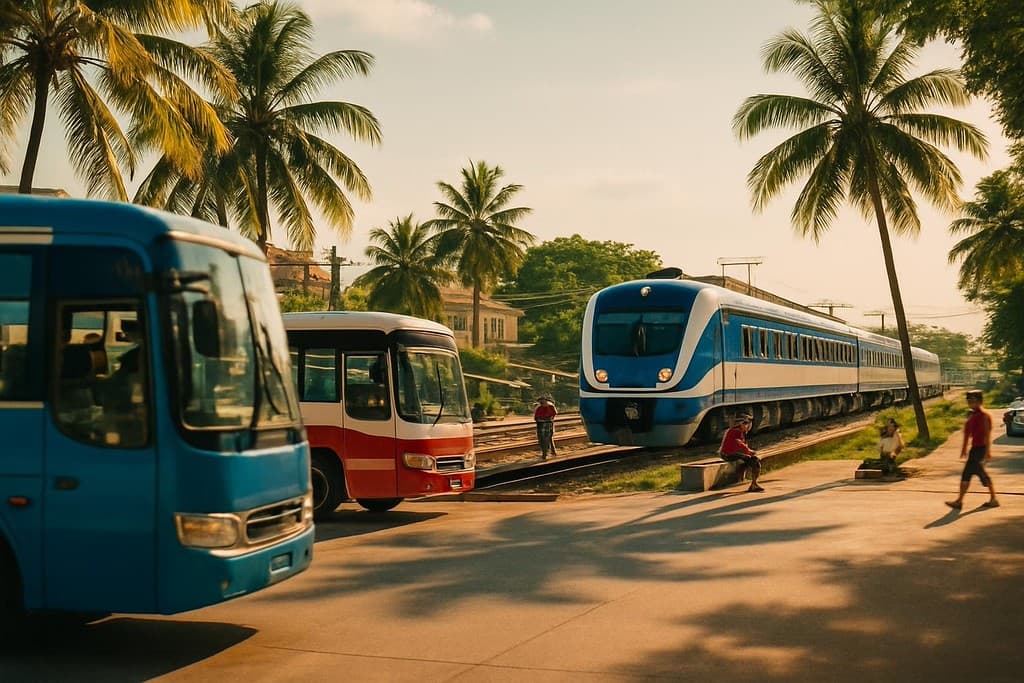
Vientiane Transport Guide
Vientiane, the capital of Laos, is the country’s main gateway and the starting point for most trips in the region. Whether you’re arriving by plane, continuing by train, or planning to head on to towns like Vang Vieng or Luang Prabang, Vientiane is Laos’s most important transport hub. This guide will help you navigate how to arrive, depart, and get around Vientiane with practical, experience-based insights.
Getting to Vientiane – Main Entry Points
Wattay International Airport (VTE)
- Wattay Airport is just about 4 km from the city center, making transfers quick and convenient.
- Official taxis are available at the terminal exit, as well as shared shuttle minivans.
- For a budget-friendly local experience, Bus 30 runs between the airport and the city center.
- Editor’s Insight: In the mornings and late afternoons, taxi waits can be long. For groups, a private minivan costs only slightly more than a taxi and offers more peace of mind.
Vientiane Train Station
- Vientiane’s main train station connects the city directly to major destinations like Luang Prabang and Vang Vieng.
- The station is about 13 km from downtown; taxis and tuk-tuks are available via platforms like Bookaway and 12Go.
- Trains are generally modern, air-conditioned, and comfortable, but booking ahead is recommended during peak seasons.
Departing Vientiane – Key Connections
High-Speed Trains to Northern Laos
Vientiane – Luang Prabang
- The high-speed train is the fastest, safest, and most comfortable way to reach the historic city of Luang Prabang.
- Travel time: Around 2–3 hours—a major time saver compared to the 6–10 hour bus ride.
- Tickets can be booked in advance via Bookaway, 12Go, and Omio.
- Insight: Seats are reserved in advance, so book early, especially from October to April (peak tourist season).
Vientiane – Vang Vieng
- The high-speed rail also stops in Vang Vieng, a popular riverside backpacker town.
- Travel time: Less than an hour—perfect for day trips or continuing north.
- Note: Vang Vieng’s train station is outside town, so plan for a short transfer to/from the center.
- Insight: The train offers food kiosks, but if you’re sensitive to local flavors, bring your own snacks.
Buses and Minivans
Vientiane – Vang Vieng: Bus
- Standard buses and minivans run between Vientiane and Vang Vieng.
- Travel time: 3–5 hours, depending on traffic and stops.
- Advance booking is available via Bookaway and 12Go.
- Insight: Minivans are quicker and more comfortable than big buses, but less ideal if you get carsick—the route is winding.
Vientiane – Luang Prabang: Night Bus
- Sleeper buses are popular with travelers wanting to save on accommodation.
- Travel time: 10–12 hours.
- Insight: Night bus beds are designed for two people—you may end up sharing with a stranger. For privacy, book a single ticket if available.
Getting Around Vientiane
Tuk-Tuks, Taxis, and City Buses
- Vientiane is easy to navigate using tuk-tuks, taxis, and local buses.
- Tuk-tuk: These three-wheeled vehicles are an authentic local option for short trips, but expect to negotiate the fare. Tourist prices are higher—ask locals or your hotel for a price estimate before you get in.
- Taxi: Can be arranged via your hotel or local ride-hailing apps.
- Buses: The city bus network is basic but expanding, especially around the airport, central market, and the train station.
- Insight: Late at night, finding a tuk-tuk or taxi on the street is harder. Plan your return to your hotel or the station ahead of time.
onward Connections within Laos and to Neighboring Countries
International Rail Links
- Vientiane is a launch point for trains towards China (via Boten). The line is rapidly developing and makes for a convenient border crossing.
- Tickets for these services are available via 12Go, Bookaway, and Omio.
- Insight: Usually, you’ll need to change trains at the border and complete immigration procedures. Check which documents and visas you’ll need in advance.
Overland Connections
- Buses depart Vientiane for other cities in Laos, as well as major cities in Thailand, Vietnam, and Cambodia.
- Vientiane – Bangkok: International Bus – Main daily service available.
- Vientiane – Hanoi: International Bus – Runs several times a week.
- Insight: International bus journeys are long (12–24 hours), and comfort levels vary. Bring earplugs, a neck pillow, and keep your passport handy for border checks.
How to Choose Your Transport from Vientiane
High-Speed Train
- Pros: Fast, safe, comfortable, avoids winding roads.
- Best for: Families, travelers with lots of luggage, anyone who prefers a smoother ride.
Minivan/Bus
- Pros: More pick-up and drop-off points, flexible tickets, local experience.
- Best for: Budget travelers, those with flexible plans, adventurers.
Domestic Flights
- Flights connect Vientiane with major destinations in Laos, but high-speed rail is usually faster door-to-door (when factoring in airport transfers).
Tuk-Tuk and Taxi
- Great for getting around the city or to transport hubs.
- Insight: Always check the fare in advance. Sharing a ride with other travelers can save money.
Practical Summary: Recommended Routes from Vientiane
- Vientiane – Luang Prabang: High-Speed Train – Fast and comfortable
- Vientiane – Vang Vieng: High-Speed Train – Ideal for day trips
- Vientiane – Luang Prabang: Night Bus – Save on accommodation
- Vientiane – Bangkok: International Bus – Overland route to Thailand
- Vientiane – Hanoi: International Bus – Epic journey for the adventurous
In summary, Vientiane is a modern, flexible transport hub giving you easy access to all of Laos and the region. Choose the mode of transport that suits you, and set off on your next adventure with confidence.
** Vientiane Transport Guide: Trains, Buses & Getting Around
** Vientiane transport guide: How to get in, out, and around Laos’s capital by train, bus, taxi, or tuk-tuk. Routes to Luang Prabang, Vang Vieng & more.