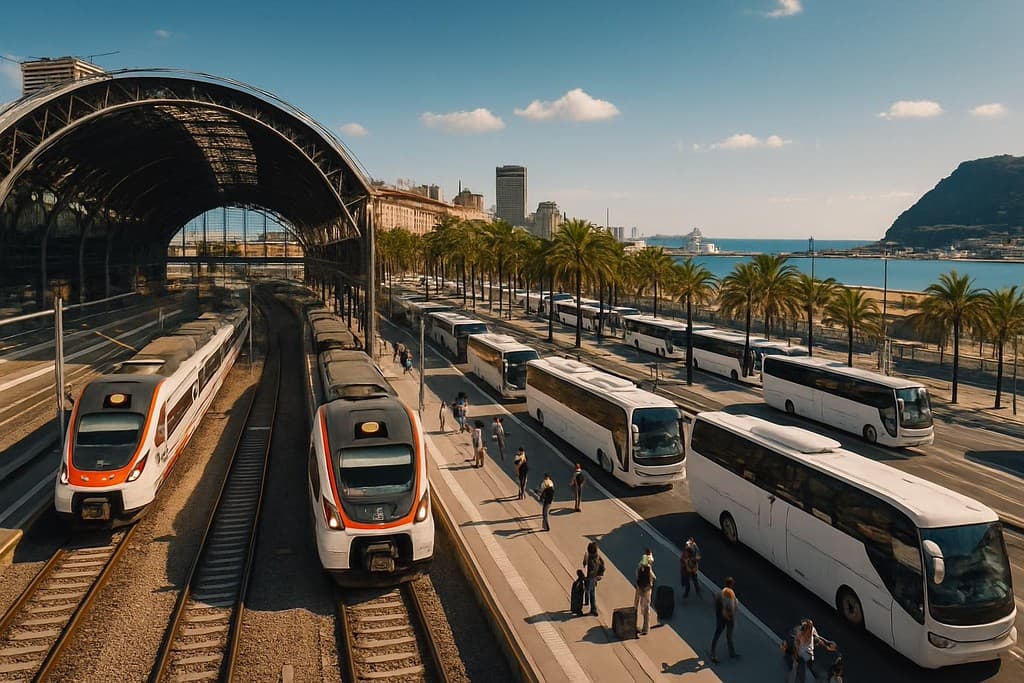
Barcelona Transport Connections
Barcelona is one of Spain’s most accessible and well-connected cities, offering a wide range of transport options to nearly every major destination in the country—by land, air, and sea. Whether you’re looking for a high-speed train to Madrid, a flight to the Balearic Islands, or a ferry to Ibiza, Barcelona makes it easy to get where you want to go. This guide covers all the practical details you need to plan your next journey from the city.
Main Connections from Barcelona – Where and How?
High-Speed Trains to Major Cities
Barcelona is part of Spain’s AVE high-speed rail network, making it easy and comfortable to reach central and southern cities quickly. If you want a smooth, quiet ride with air conditioning, power outlets, and Wi-Fi throughout the journey, this is the best choice.
- To Madrid: Barcelona ↔ Madrid – The high-speed train departs from Sants station and arrives at Madrid’s Atocha station in just about 3 hours. There are plenty of departures each day, and the train is often considered the most comfortable option, especially compared to domestic flights. If you want to arrive directly in the city center without airport hassles, this is the way to go.
- To Córdoba & Seville: Barcelona ↔ Córdoba and Barcelona ↔ Seville – Direct AVE lines are very popular for exploring Andalusia. Booking tickets in advance (preferably via Omio or Rail Europe) can save you money, especially during peak travel seasons. The ride is longer than to Madrid, but the changing landscapes from your window are a highlight of the trip.
Editorial Insight: On Spain’s intercity trains, seats are reserved—no need to rush or wait in line. Arrive at the station 20–30 minutes before departure for a relaxed boarding process.
Buses – Budget-Friendly Options to Various Destinations
Not every destination in Spain is served by high-speed rail, and for some routes, the bus is the most flexible and affordable choice—especially for overnight trips or smaller towns.
- To Valencia: Barcelona ↔ Valencia – Frequent buses depart from the main station. The journey usually takes 4–5 hours. Buses often run later at night and have more pick-up points around Barcelona, making them convenient if you’re not staying in the city center.
- To Malaga & Granada: Barcelona ↔ Malaga, Barcelona ↔ Granada – These long southern routes are ideal for travelers looking to save on a night’s accommodation (overnight bus) or those who don’t mind a longer journey and want to enjoy the scenery. Be sure to check the latest schedules and city stop locations.
Editorial Insight: Modern Spanish buses are comfortable, with Wi-Fi, charging outlets, and regular rest stops. Still, amenities aren’t quite on par with trains, so bring water and snacks for the ride.
Ferries – Access to the Balearic Islands
Mallorca and Ibiza are just a few hours by ferry from Barcelona, and sailing has become a popular alternative to flying.
- To Mallorca: Barcelona ↔ Mallorca – Ferries depart several times a week (sometimes daily in high season). You can choose between a fast daytime crossing or an overnight sailing with a sleeper cabin. It’s a unique way to combine a cruise-like experience with easy island access.
- To Ibiza: Barcelona ↔ Ibiza – The route is similar, though there are sometimes fewer direct sailings. Note: Demand is especially high in summer, so book early—particularly if you plan to bring a car onboard.
Editorial Insight: Overnight sailings are popular with families and couples—the cabin is quiet, the sea views are relaxing, and arriving in the morning lets you make the most of your day. In summer, some ferries even feature a sundeck with a pool—a far cry from a standard ferry crossing.
Flights – Fastest Access to Islands and Distant Cities
Barcelona’s El Prat Airport is Spain’s second busiest, with frequent connections to all major destinations—especially the islands.
- Flights to the Balearics: Often, flying is faster and cheaper than the ferry, especially with hand luggage only. Compare flight times with ferry schedules to see what works best.
- Flights to Northern Spain: Barcelona is also a convenient gateway to places like San Sebastián or Bilbao, with several direct flights daily—saving you hours compared to overland travel.
Editorial Insight: Sometimes the flight itself takes less time than getting to the airport and checking in—factor in travel time, security, and waiting, especially for early morning departures.
Getting to and from Barcelona’s Airport and Main Stations
Barcelona El Prat Airport
- Getting to the city: R2 Nord train, L9 Sud metro, AEROBUS (every 5–10 minutes), or taxis. The train is usually the most convenient option for reaching the city center (Sants, Passeig de Gracia stations).
- Between terminals: A free internal shuttle runs between T1 and T2.
- Where to stay: Most trains, buses, and ferries depart from central Barcelona. Consider spending your first night near Plaza Espanya or Sants for easy access to transport.
Editorial Insight: In the early morning, the AEROBUS is sometimes the only option—trains and metro generally start running around 5:30–6:00am.
Main Transport Hubs in Barcelona
- Trains: Sants station is the main hub for high-speed and intercity trains. França station handles mostly regional and a few intercity lines.
- Buses: Nord bus station is modern, well-organized, and within walking or metro distance from the city center.
- Ferries: Port Vell is located just south of La Rambla, about a 10–15 minute walk from the old city.
Editorial Insight: Switching between stations in Barcelona is straightforward—the metro network is extensive, clearly marked, and easy to use. Spend 10 minutes learning the lines and your first day in Barcelona will be much less stressful.
Popular Routes from Barcelona – Practical Recommendations
- Barcelona ↔ Madrid – The fastest and most comfortable train option; flights are best only if you’re connecting onward.
- Barcelona ↔ Córdoba – Great for exploring Andalusia, often combined with a trip to Seville.
- Barcelona ↔ Valencia – Frequent bus and train services, also suitable for a day trip.
- Barcelona ↔ Ibiza – A memorable ferry ride, especially in summer.
- Barcelona ↔ Mallorca – Ferry or flight? It depends on your schedule and travel style.
- Barcelona ↔ Malaga – High-speed train or bus—choose based on your budget and time priorities.
Practical Summary: How to Choose the Best Route?
- Speed: For the quickest journey, take the AVE high-speed trains or direct domestic flights.
- Savings: Buses offer the lowest fares and flexibility, especially for overnight travel.
- Experience: Ferries to the islands promise a unique adventure—especially for families and couples.
- Convenience: Digital ticketing (Omio, Rail Europe, Direct Ferries) skips the lines and guarantees your seat.
- Coordination: Check departure times, pickup points, and seat or cabin types—small details can make a big difference.
With so many routes and options, Barcelona is an ideal starting point for exploring Spain—whether you travel by land, sea, or air.
Barcelona Transport Connections: Trains, Buses, Ferries & Flights Discover all transport options from Barcelona: trains, buses, ferries, and flights to major Spanish destinations. Plan your trip with practical tips.